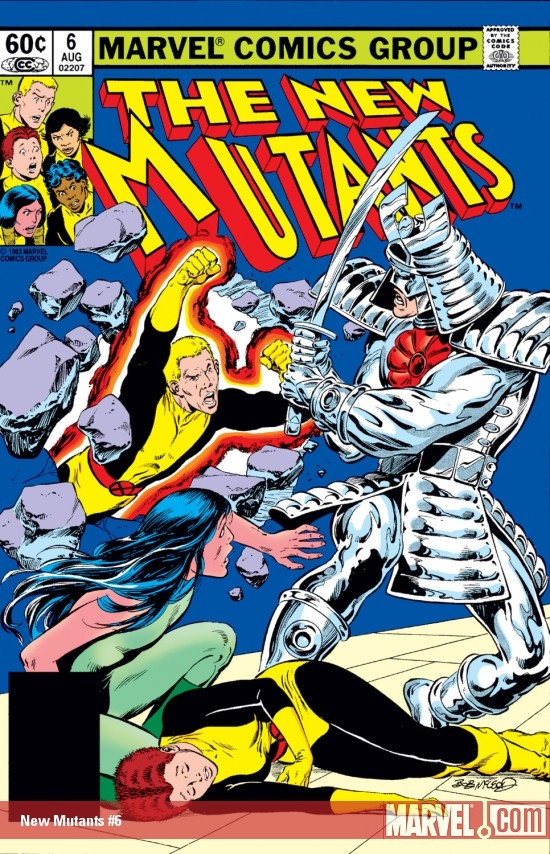
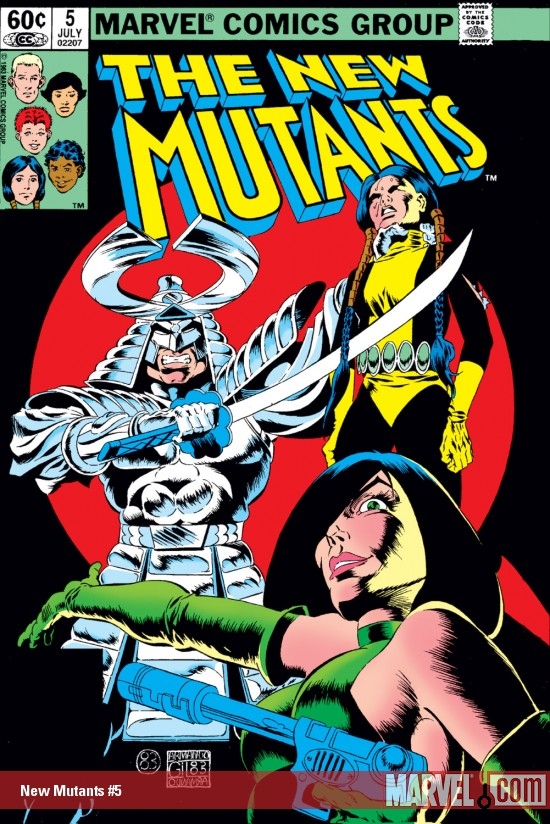
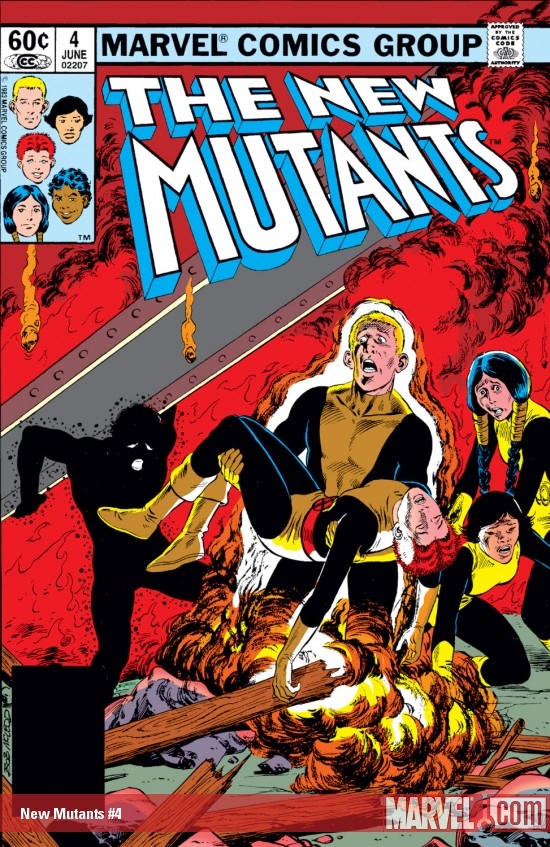
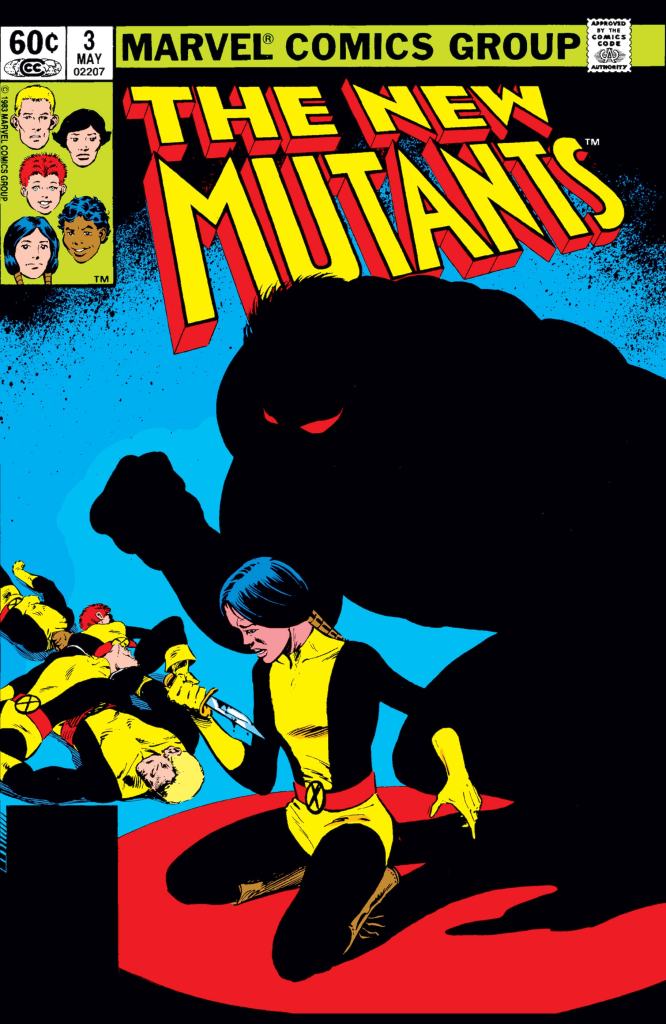
The New Mutants/Team America team-up continues – a comic book event so huge Team America yet again fail to get any mention or appearance on the cover.
While the New Mutants seeks to rescue Psyche from Viper’s clutches, Team America seek to steal a precious item to stop Viper killing her captive.
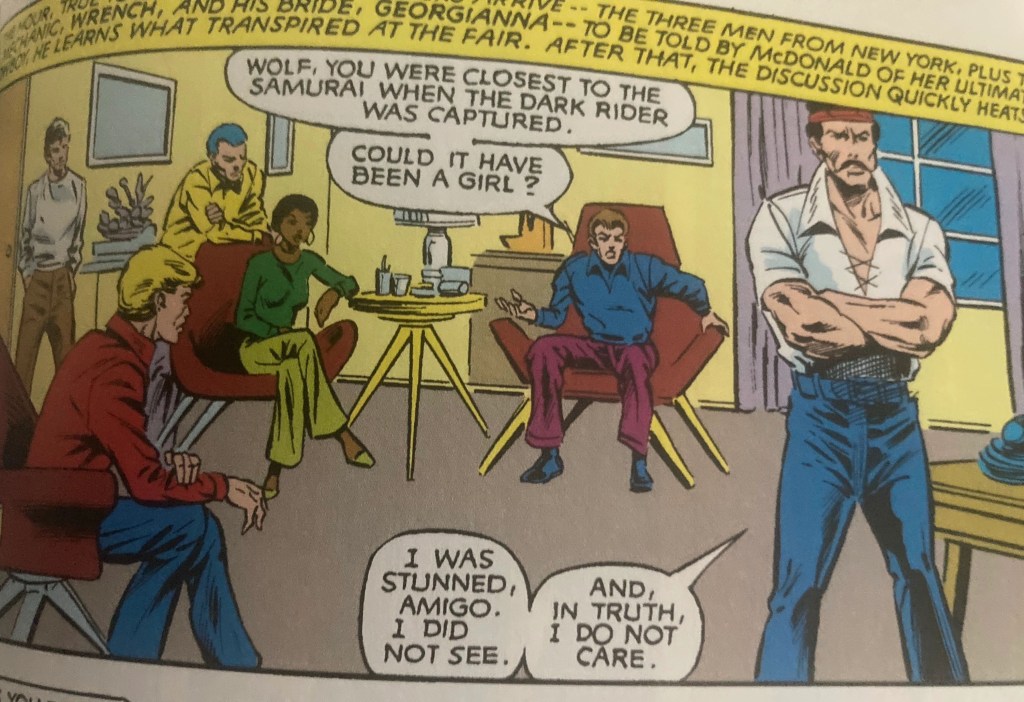
The end result is two underwhelming base attacks. Claremont is normally really good at these but there’s a lack of invention and tension to both missions.
Team America’s is especially daft. These Macho Macho men argue, rough house and successfully steal a diamond from AIM. Whose fortress then explodes. For no good reason. But Team America survive. For no good reason. Leaving a plot strand that we’re never ever going to see again.
The New Mutants mission is slightly more fun. Their diverse powers help keep things interesting. Before it ends with their antagonists fleeing. For no good reason. And then another explosion. For no good reason.
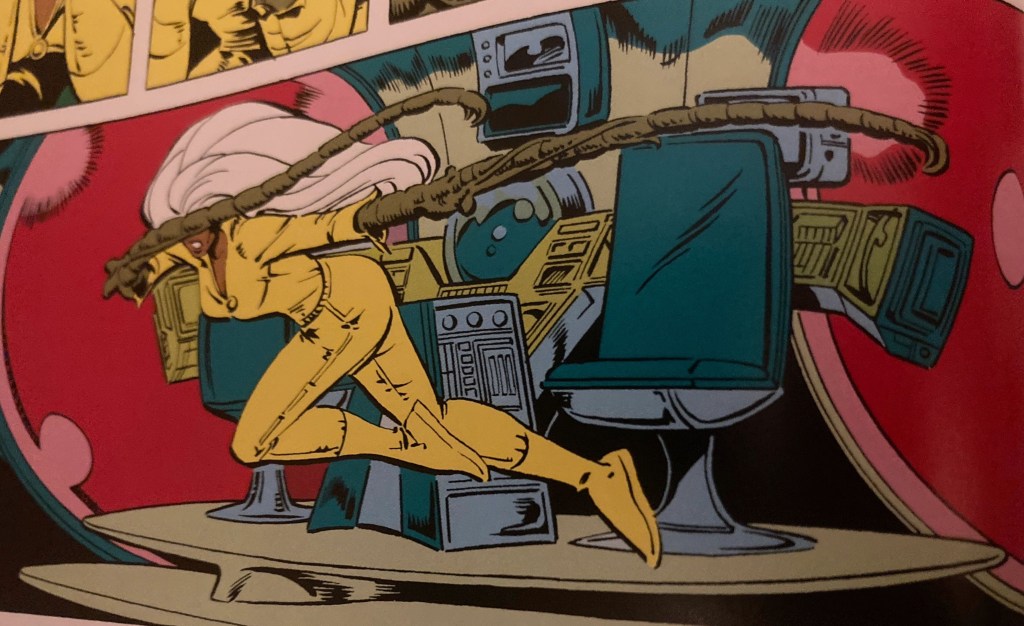
All of this isn’t helped by art that feels at moments like it’s up against a really tight deadline. Scrappy, small panels. And a real lack of dynamism.
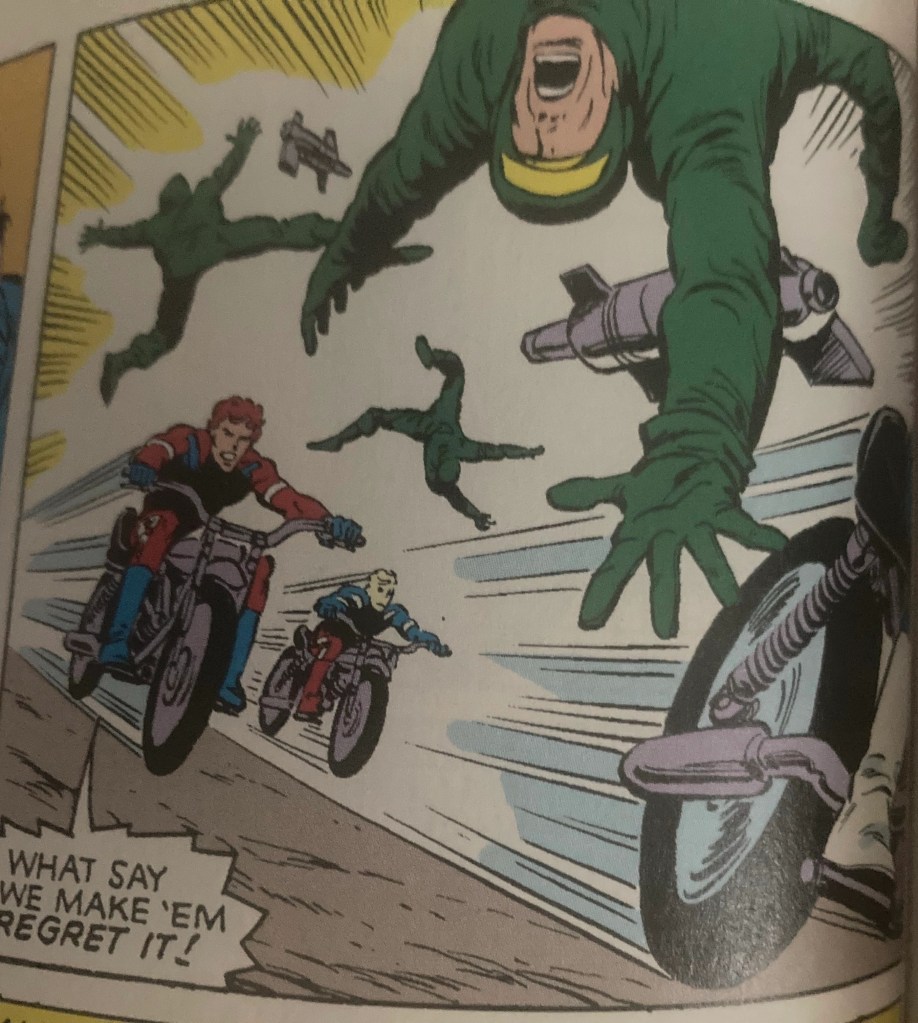
Fun Panel
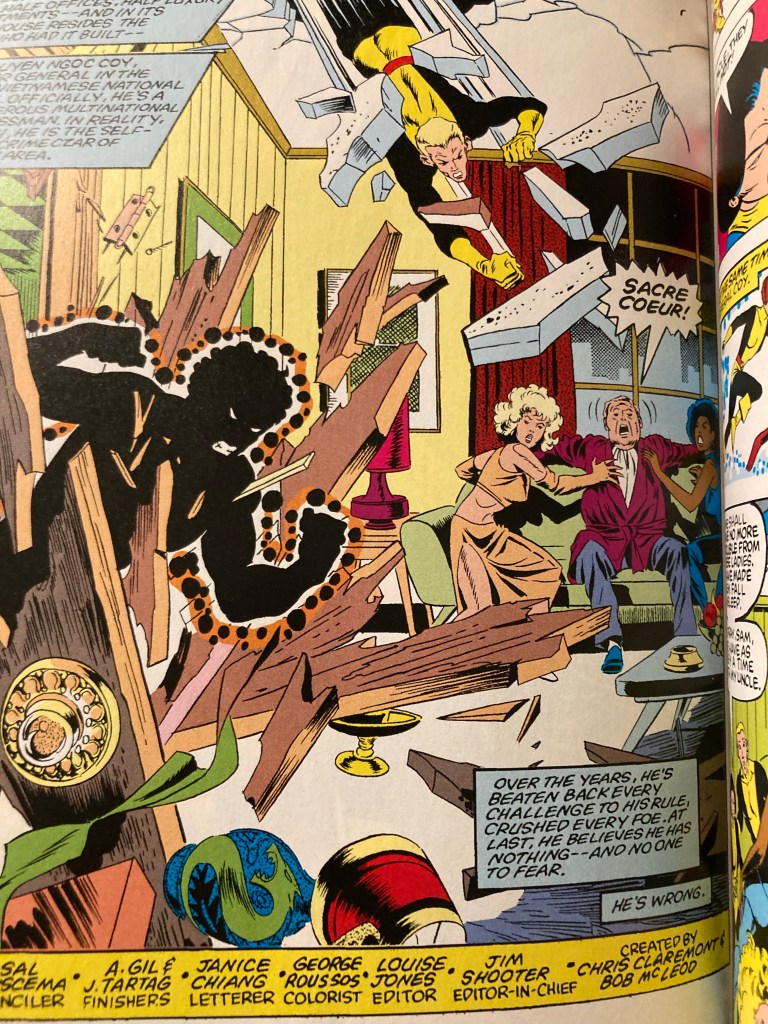
Despite my criticism, though, Buscema does a great opening panel.
The style of the New Mutants comic feels like they’re deliberately avoiding large showpiece panels to help sell the low-level nature of the adventures. But it’s good to have them occasionally.
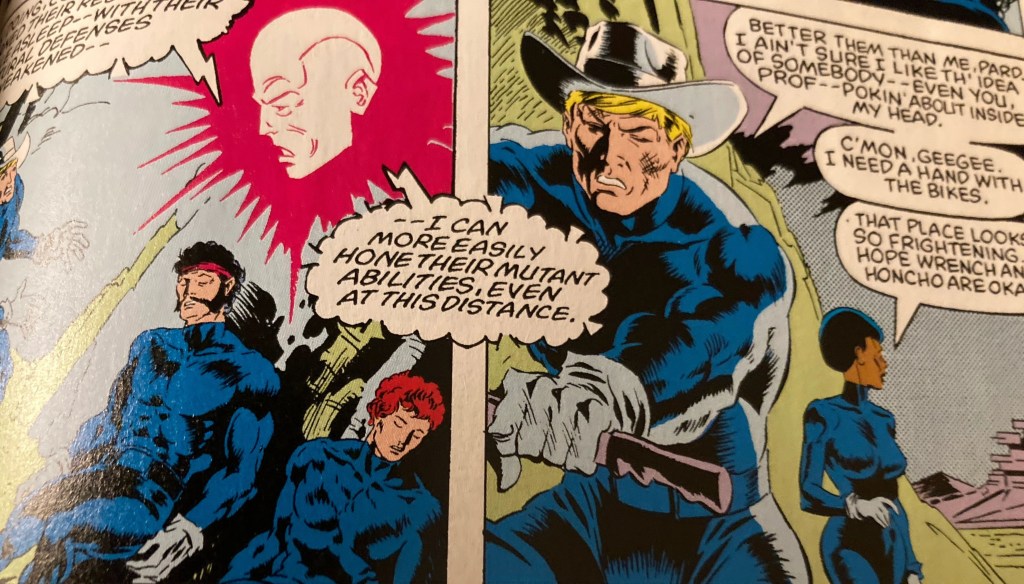
As a title New Mutants continues to perplex. Last issue was an interesting exercise on taking what – in a super hero universe – would seem like a low key threat and taking it with real world seriousness. This issue is all about motor bike heroes, samurai and a hit evil chick in a sexy outfit. This doesn’t so much feel like a comic that has an absolutely rock solid vision and direction behind it, more that product of trying to cram in everything an eleven year old boy might want in a comic.
It trundles along nicely enough, with a servicable plot. But it feels like such a weird conconction of ingredients that it’s hard to get a handle on what type of comic this is. Mad stuff seems to happen that doesn’t really make much sense – Psyche is a secret masked bike-riding hero what?? – and it all slowly grinds to a surprisingly verbose and underwhelming cliffhanger and set-up for next issue.
Any Googling
Halfway through this issue, I think most readers nowadays would have one perfectly reasonable question. Who the **** are Team America.
It turns out they were a project Marvel took on to align with an existing toy range. It doesn’t seem like the editors were that enthused by the concept, but they launched a Team America title in January 1982. Reading about that title and the central concept makes a bit more sense of this issue of New Mutants, although it really doesn’t explain what they are doing here.
Not least because by the time they turn up to adventure with the New Mutants, their own title had been cancelled two months earlier with Issue 12. If this was intended to be cross-promotional, its one that had already missed the point by publication date. I guess its revealing that the cover makes no mention of Team America guesting in this issue becuase by the time they were bringing it out, what would be the point. The comic was dead, the toy range was winding up and the general public had clearly sent a message that they did not care for Team America. Reading this comic, you get the impression Claremont didn’t either.
Back to the New Mutants and the title’s dedication to low-level threats is evident here.
It’s a story about stalking and threatening incel behaviour years ahead of its time.
There’s a nice balancing act going on here between teens possessing superpowers tackling the problem caused by an abusive teen exploiting his ability to be anonymous. Dilemmas requiring superpowers spring up (woman and child in danger from a speeding car, building on fire that just happens to full of explosives) but it’s still at heart a story that takes the low level threat seriously.
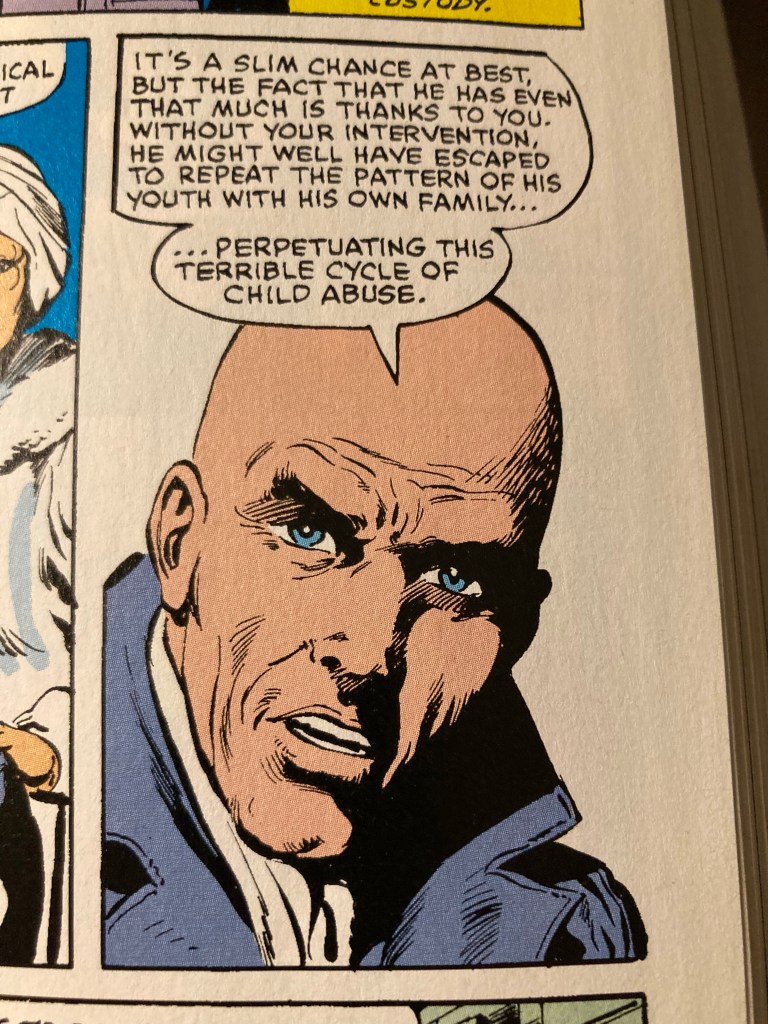
The reality of it is hammered home at the end. There is no real happy ending, just an abused and damaged teen taking into care and therapy that might not work. You can’t help but feel that in the X-universe as presented so far, the likes of Xavier could have come up with a super power fix for the issues antagonist. A bit of mental jiggery-pokery to eliminate a child’s pain and enjoy something close to a normal life. As a moment it illustrates, I think, how Claremont is trying to define the title’s feel and world distinct from the cosmic and crazy world of the X-men.
Sal Buscema takes over on art duties here – and he does a serviceable job. I get the impression that they wanted him to draw in a manner that wouldn’t mess with the basic look of the comic already established by Bob McLeod. Ironic given what’s to happen when Buscema moves on.
It seems strange that the big launch of a brand new X spin-off loses its artist and co-creator so early. Which may explain the caution in keeping the same look going. McLeod apparently asked to leave the titles as he felt that drawing and inking a comic every month meant he wasn’t producing to his potential. It’s a shame we never got a proper run at delivering the title Claremont/McLeod envisaged. Buscema does a good enough job but in continuing a style that was deliberately quite conservative to begin with it makes the title feel quite lifeless that might not have happened if the artist who had originally helped envisage this approach stayed on to show how it worked.
Fun Panel
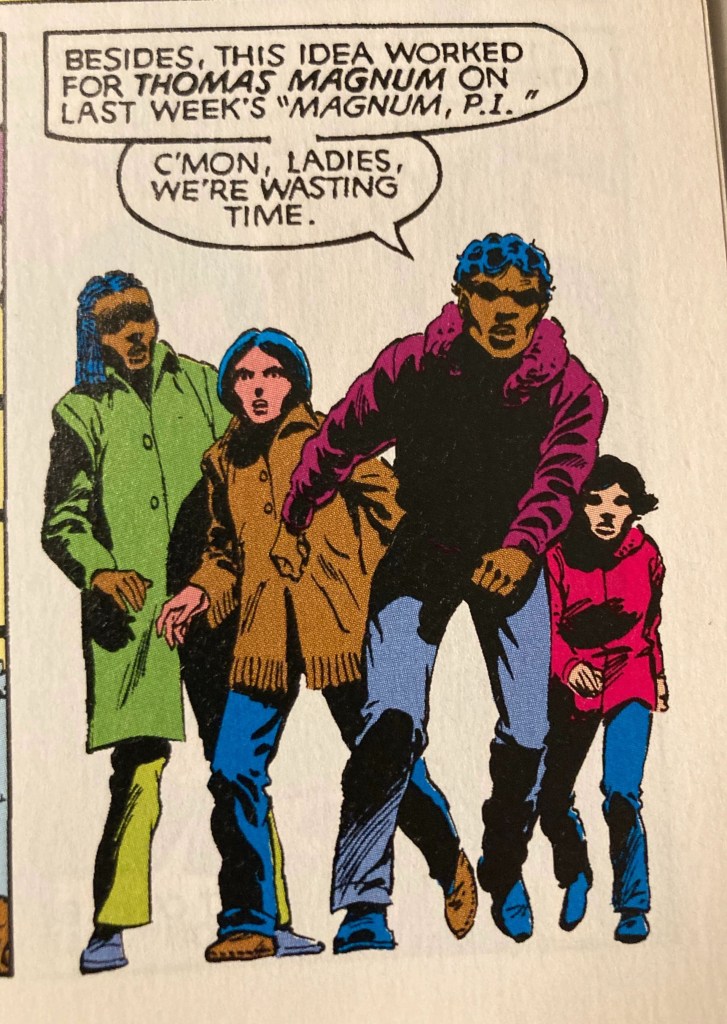
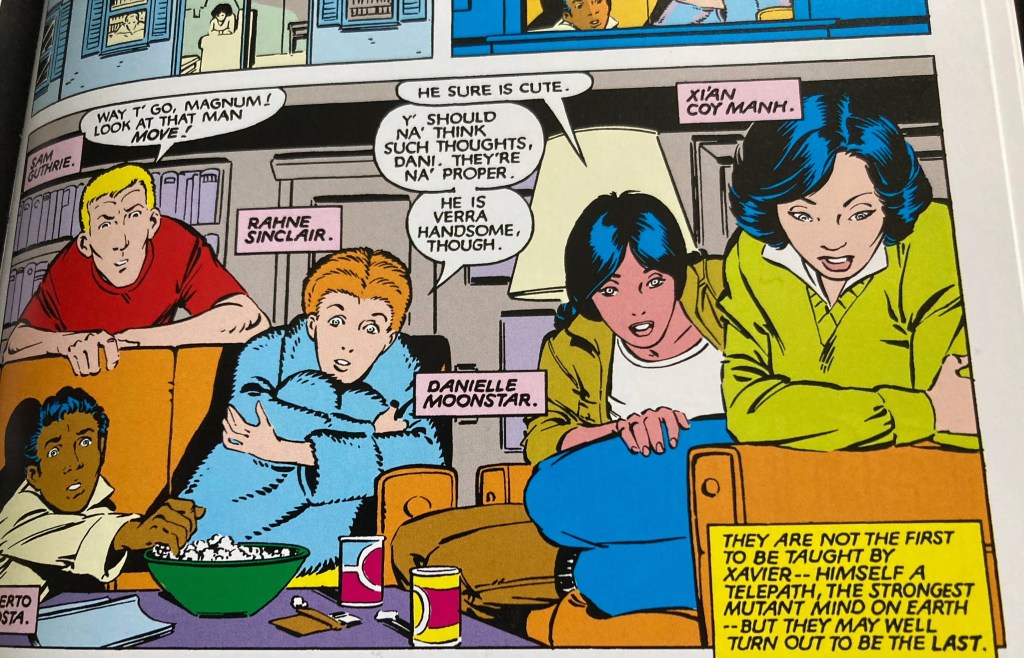
Were all teens at the time obsessed with Magnum PI? You’d think so given the way the New Mutants won’t shut up about him.
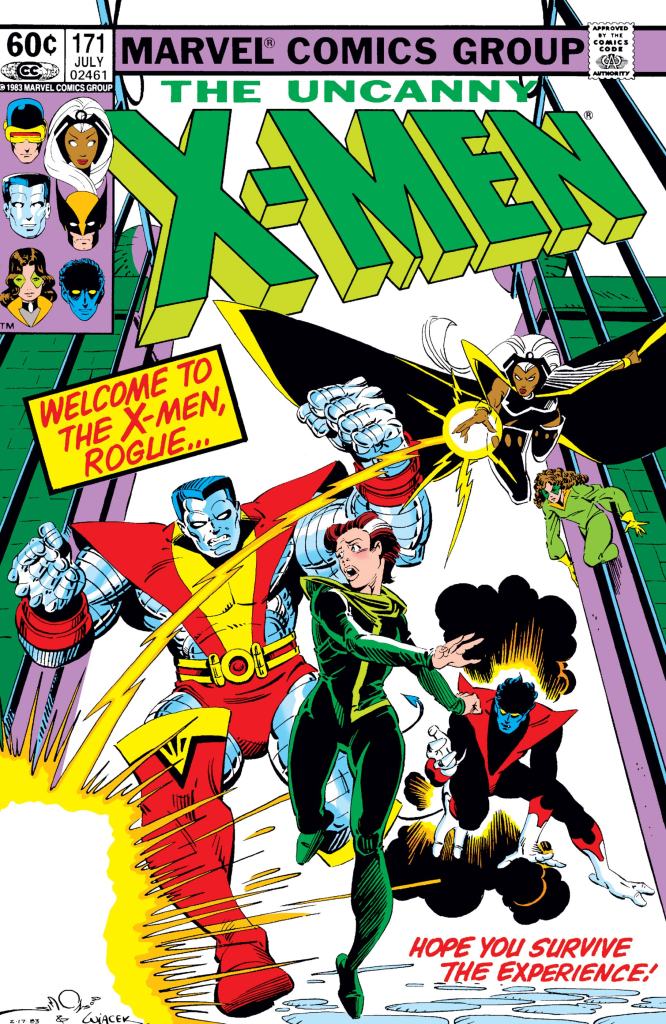
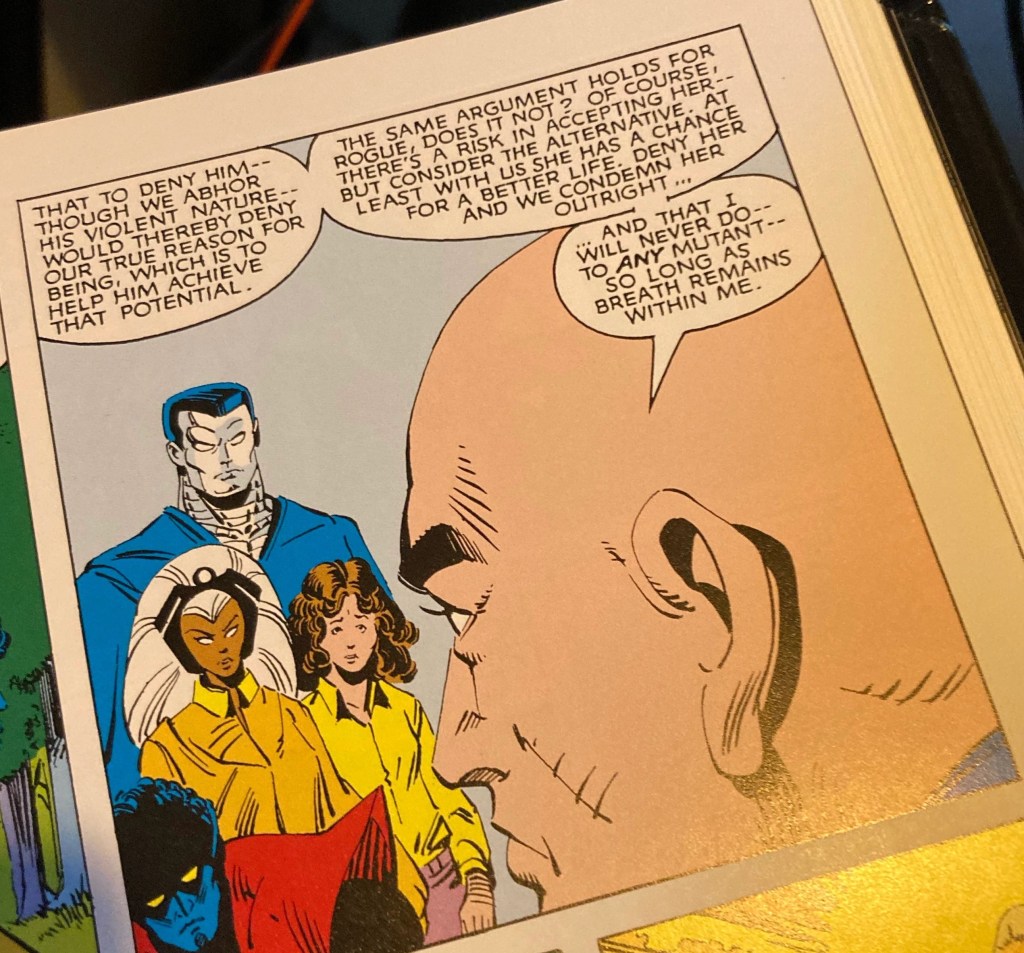
This issue is most famous for Rogue joining the X-men, but even though that would normally be more than enough, its so much richer than that. It’s an issue that focuses the storytelling on the trauma and suffering of three characters, and in doing so sets up dramatic arcs that are going to be some of the most memorable moments of the Claremont Run.
What’s more, all three characters are women.
Claremont’s been building up women within the supporting cast of the comic for many, many issues now but the core of the team has remained numerically male-dominated. That’s pretty much changing at this point – Rogue joining Storm and Kitty on the team (while Cyclops already has one foot out the door) isn’t some tokenist appointment. It’s practically a mission statement as to what this comic is going to focus on.
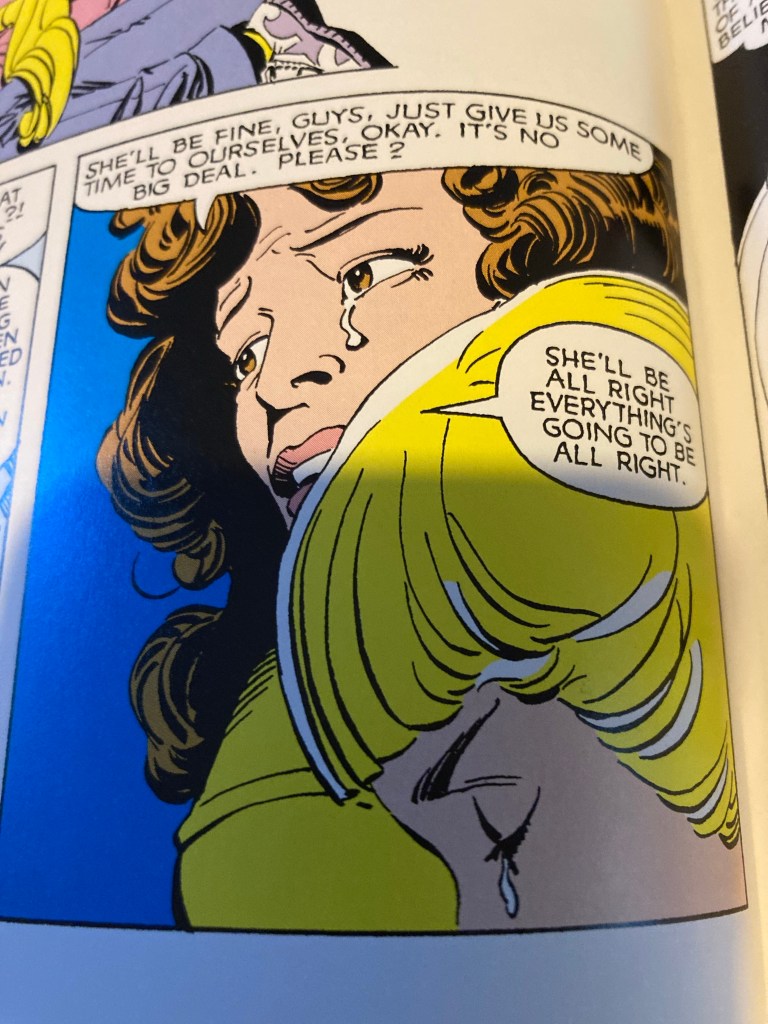
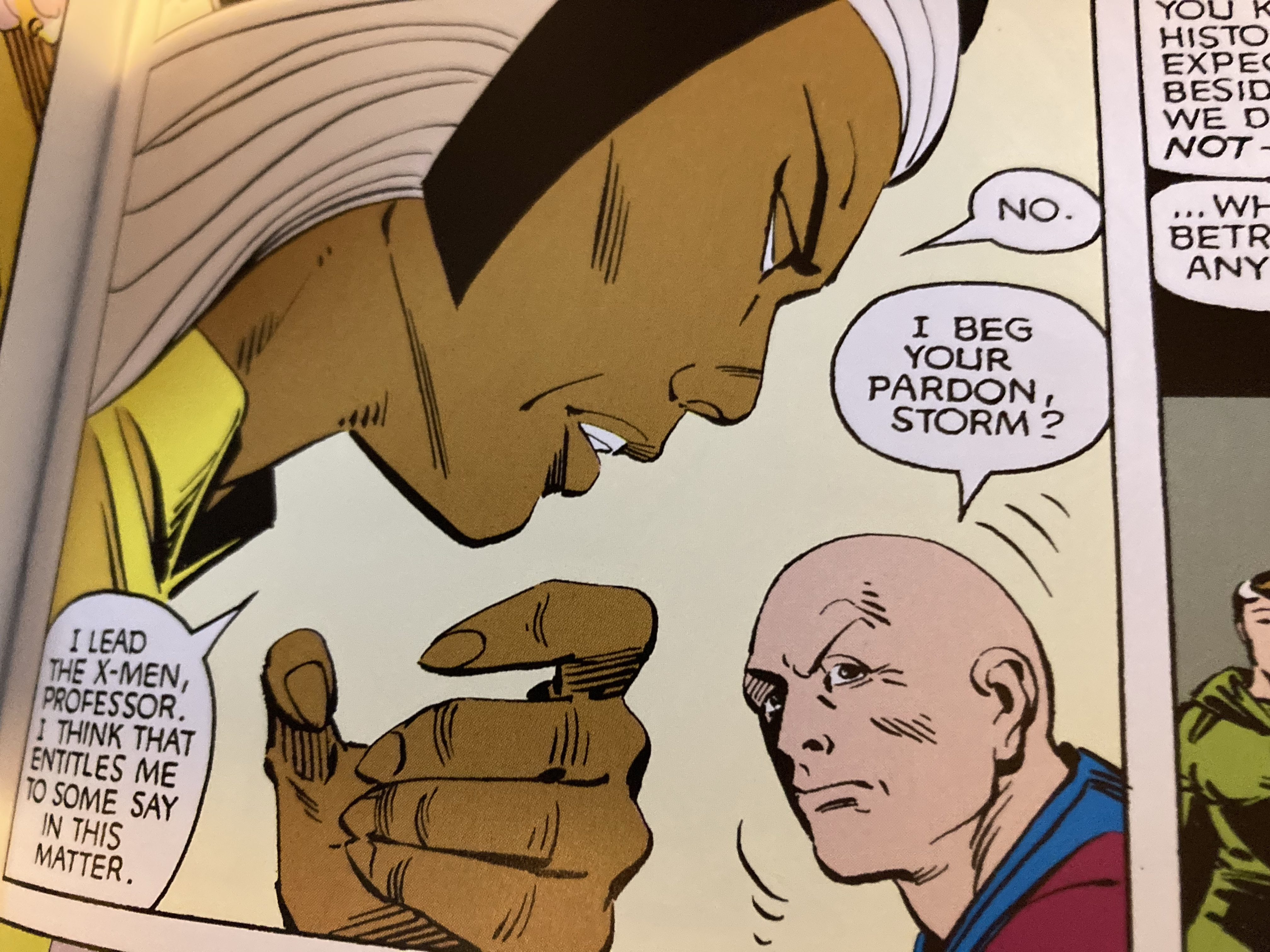
In this issue, Rogue joins. Having pleaded with Xavier for help to assist the problems she’s having after absorbing the powers and memories of Carol Danvers. Illyana’s traumatic abuse at the hands of Belasco is revisited, introducing the idea that this story is not yet over. And Storm continues to evolve into a leader, while struggling with her own doubts and the failure of those around her to take her position seriously. All these lay down ideas and plots that the title will be exploring for years to come.
And that’s not even all of it. Cyclop’s new (ahem) flame Madelyne Prior gets her own moment as we learn she was involved in a plane crash on the same day Jean Grey died. And Carol Danvers returns to the mansion to discover Rogue there and make the decision that if they want her as a member, she’ll be off. A story arc opening and another closing. This is fantastic stuff.
Fun Panel
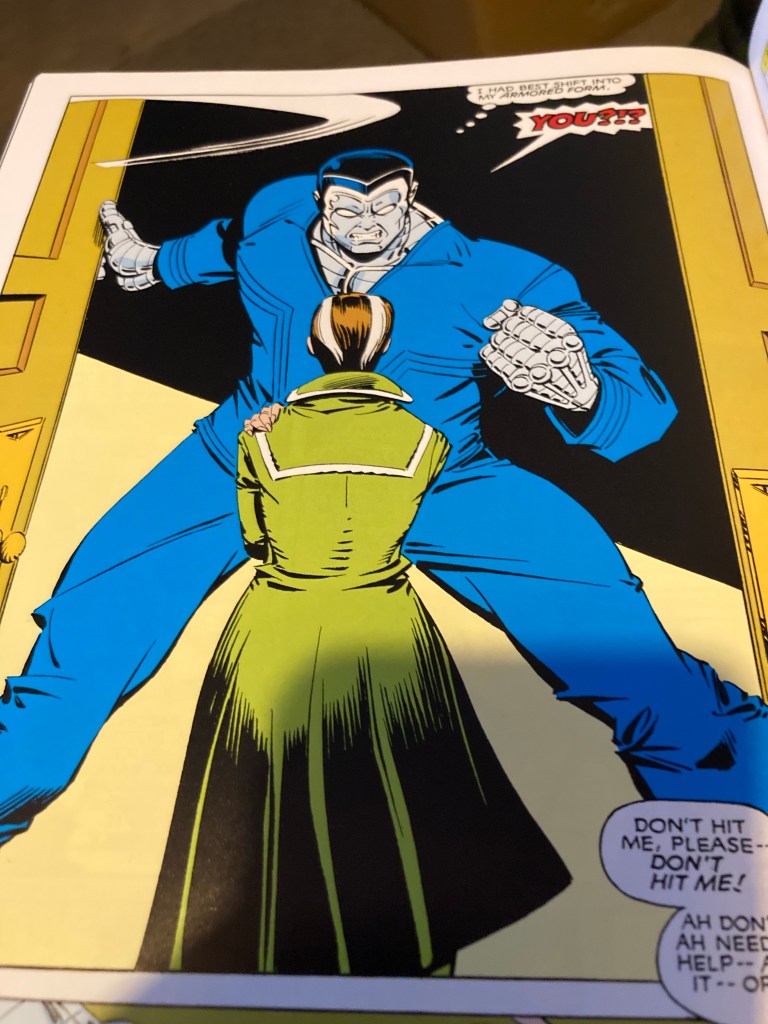
Walt Simonson comes on board for a guest penciller spot and knocks it out the park like… well like a Carol Danvers meeting Rogue in the Xavier Mansion.
In my opinion the best Claremont issues manage to balance a number of distinct stories within the limited page count. They won’t just include action and excitement, but quiet, personal moments. As the reader we’ll learn something about the characters, maybe when one of them makes a decisive decision – and the characters themselves might learn something about each other. There’ll be a touch of romance, melodrama and a genuine sense of threat and death. For all these reasons, I think this is one of my favourite issues.
Also the best issues have Mystique and Destiny in it. Another plus for this one.
And finally the issue will dangle a brand new idea/concept that the title will go on to develop, and which is genuinely inventive and intriguing.
From the first page to the end, this is a great issue.
Fun Panel
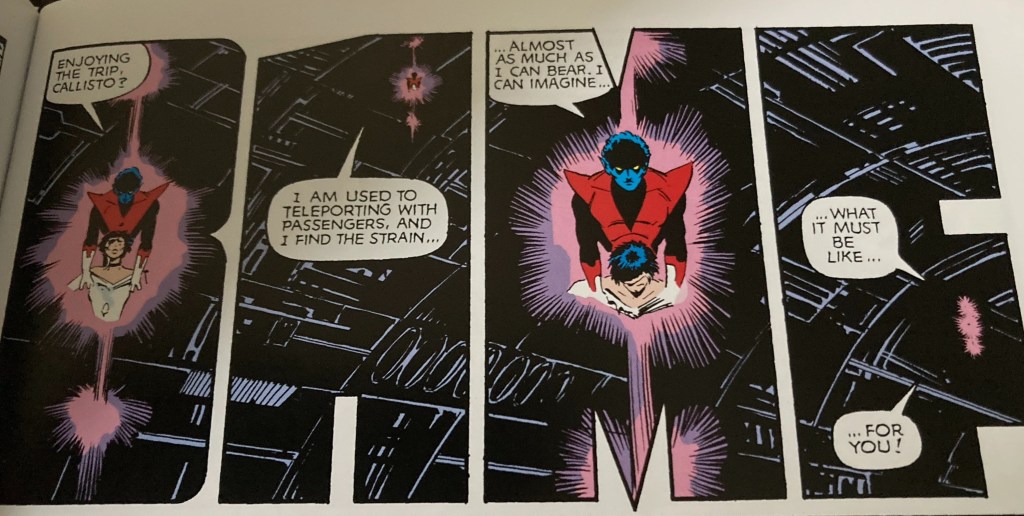
Paul Smith’s creative visual use of “Bamf” as Nightcrawler attempt multiple teleports is subtle, yet striking.
Any Googling
This issue tells the story that Rogue has run away from Mystique and Destiny. As a member of their Brotherhood of Evil Mutants, she’s only featured in the comic before, when Carol Danvers and the X-men come across her on an espionage mission in the Pentagon.
This blog has also taken in her appearance in Avengers Annual 10, primarily because its such an important development for the character that is so important to who she is during the Claremont Run.
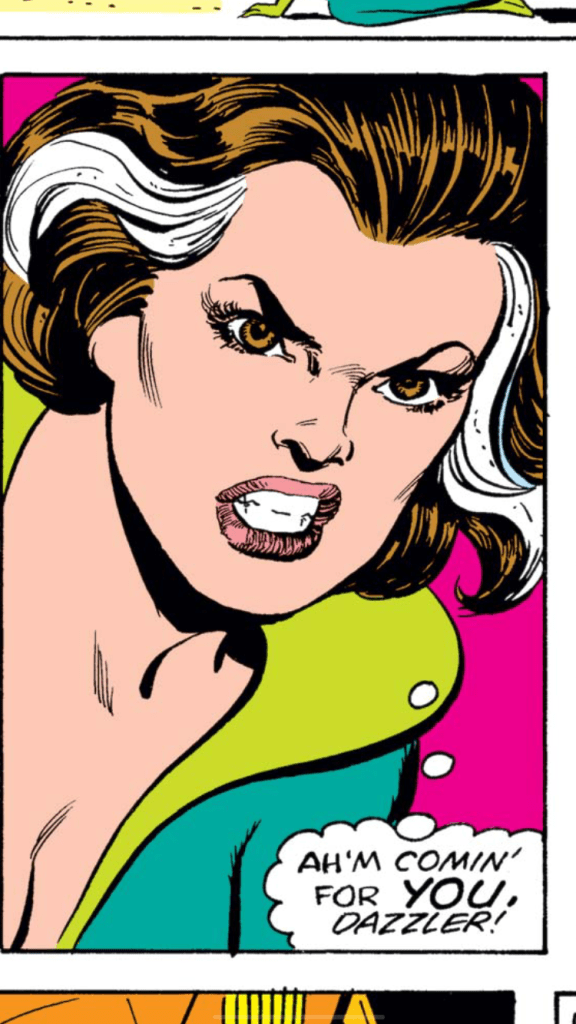
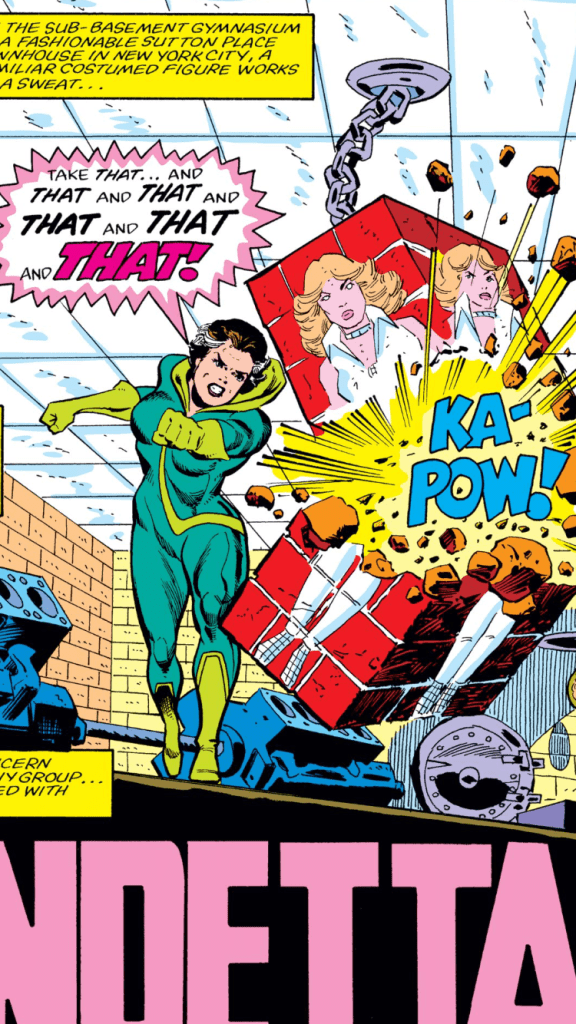
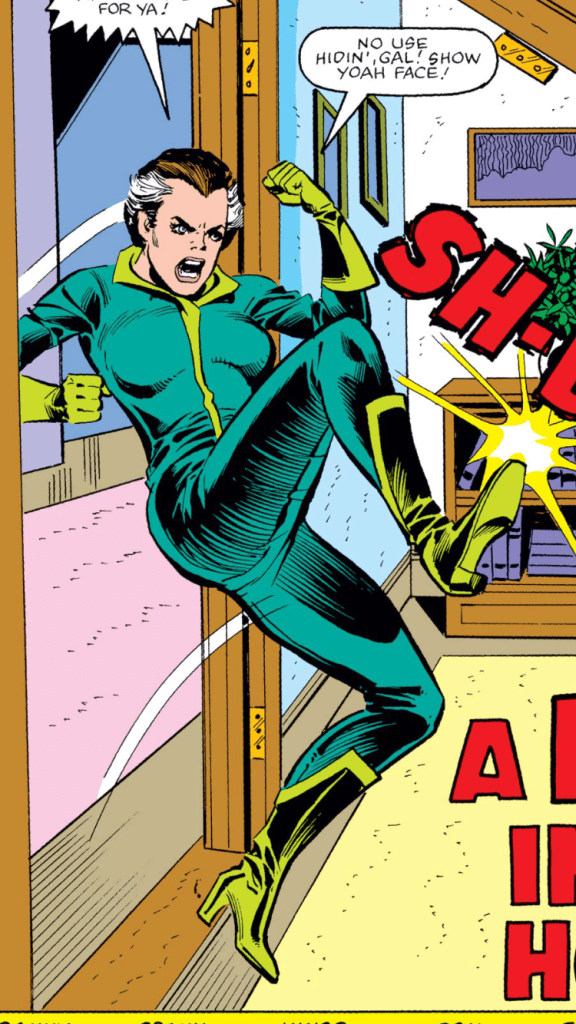
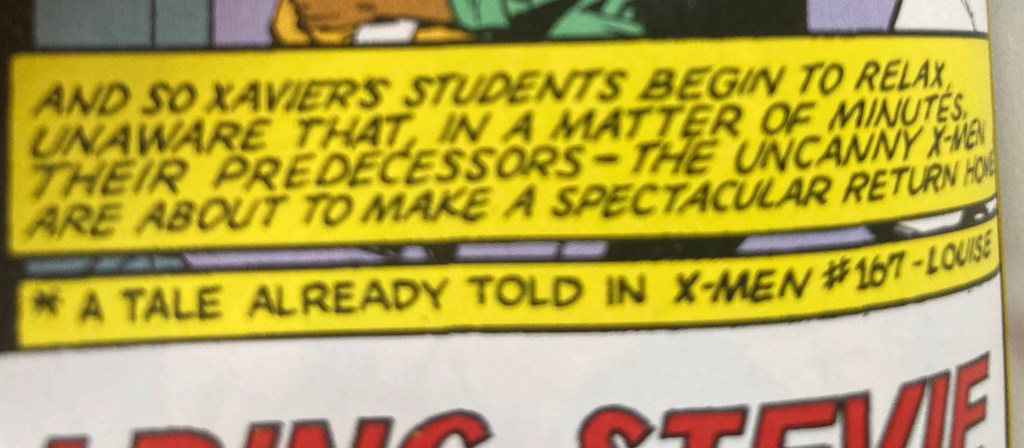
But, as the text boxes make clear, this is only a fraction of Rogue’s story up to now. In the Avengers Annual 10 blogpost I mentioned the planned issues of Ms Marvel that were to see Rogue attack Carol Danvers and steal her powers (we only seem the aftermath in comics published at the time). This time I went and researched the Dazzler issues pointed to in this issue.
It’s fascinating to explore this early Rogue history. Especially in issues not written by Claremont. It’s hard to see any indication of Rogue’s upcoming repentence here. She’s a hot tempered bad girl, in a comic that frequently feels incredibly dated in its visuals and dialogue. Dazzler is the fifties Good Girl, conventionally good looking and charming to everyone. Rogue the angry fifties beatnik who (gasps) doesn’t even seem to like men.
It’s slightly surprising that all these early Rogue appearances do not appear to have ever been collected into a single volume. Or even been a time periods that a subsequent writer has decided to do a flashback mini series about. They make for interesting reading, and probably do belong in a completists collection.
One aside from reading the Dazzler issues is that we learn that Rogue is only after Dazzler to get to the X-men. And that she is (briefly) placated by being told that the X-men (currently out on their Brood space adventures) are Dead. Alongside the origins of the New Mutants, the suggestion that the X-men are Dead seems to be important here. Which is curious because its something that you don’t get the impression that anyone thinks the X-men are really dead if you just read Uncanny X-men. They’re off on an adventure. I guess the dead angle was more useful for those other stories – and wasn’t really needed in the main one.
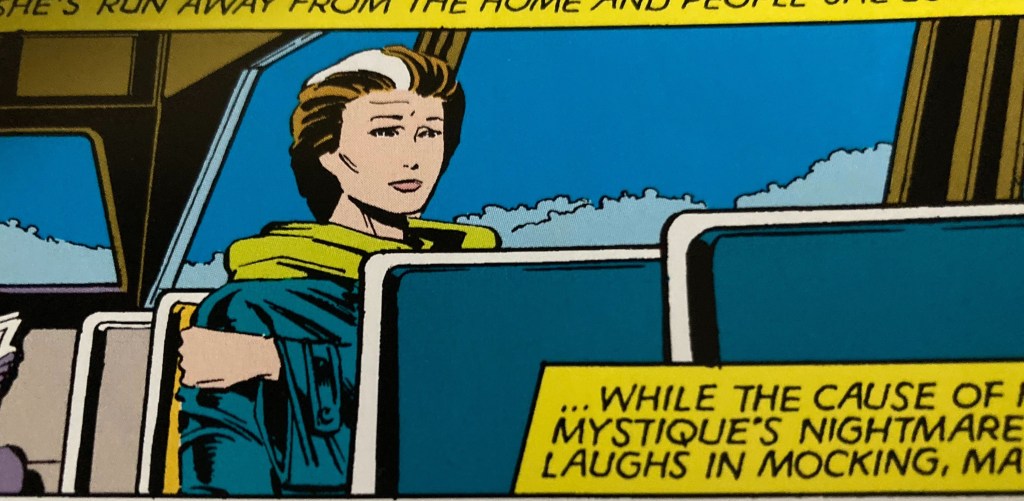
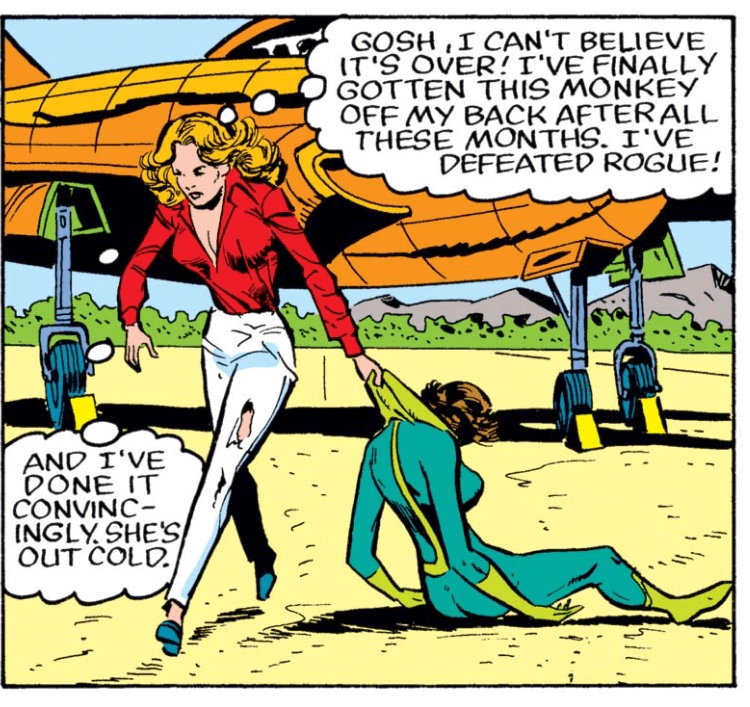
Anyway – here’s the last of Rogue from the Dazzler title. Finally defeated, apparently, by Alison – and dumped into a car and returned to Destiny and Mystique. The next thing she does is flee and get on a bus heading for Westchester…
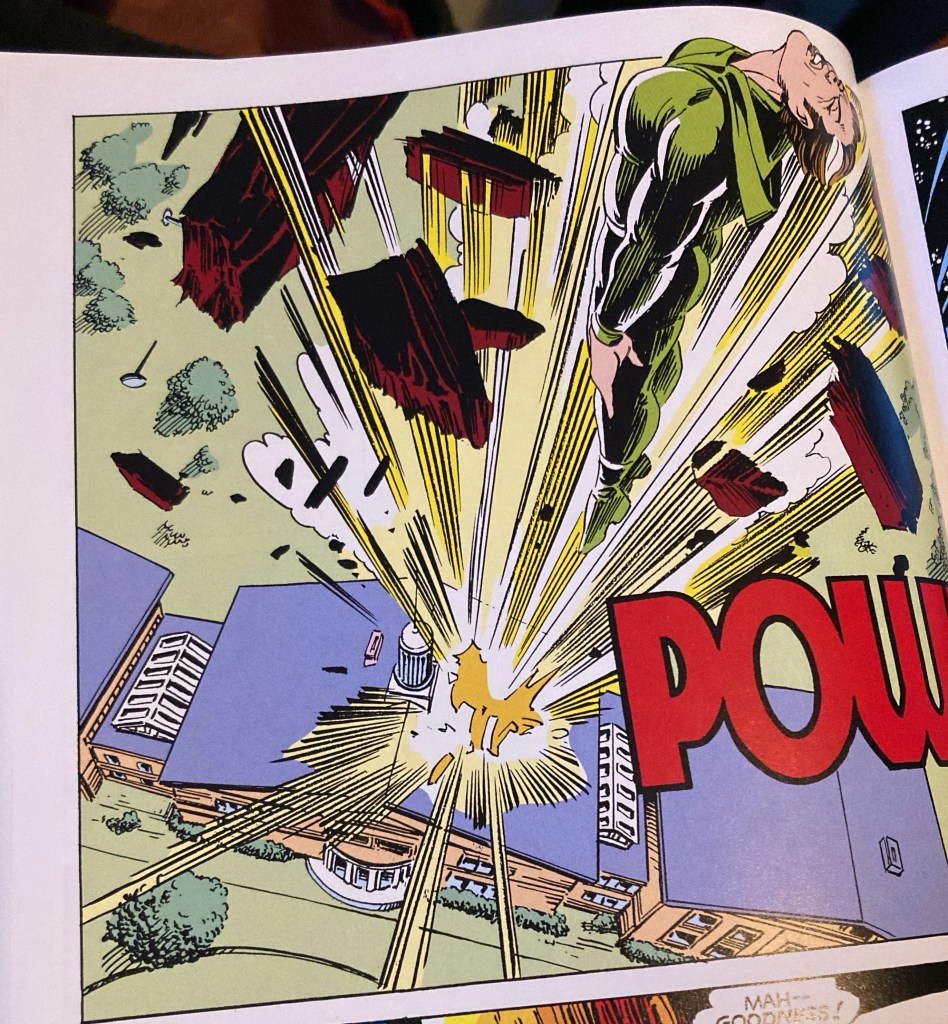
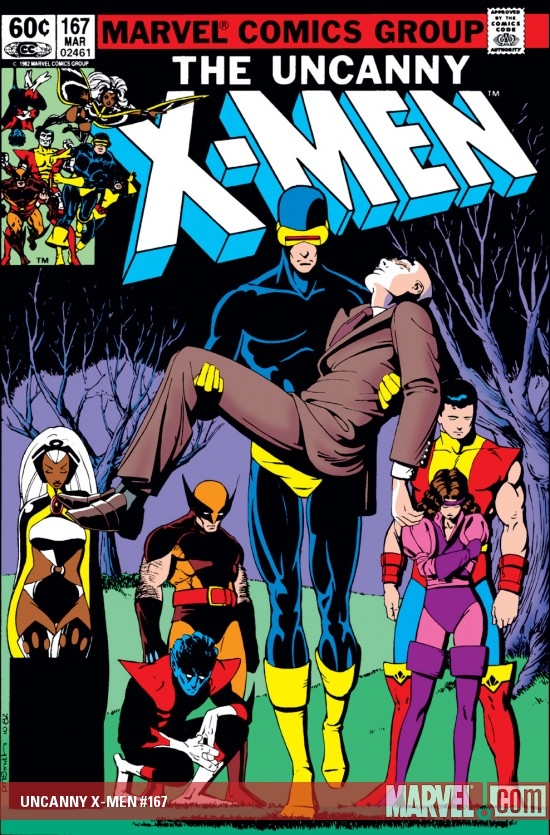
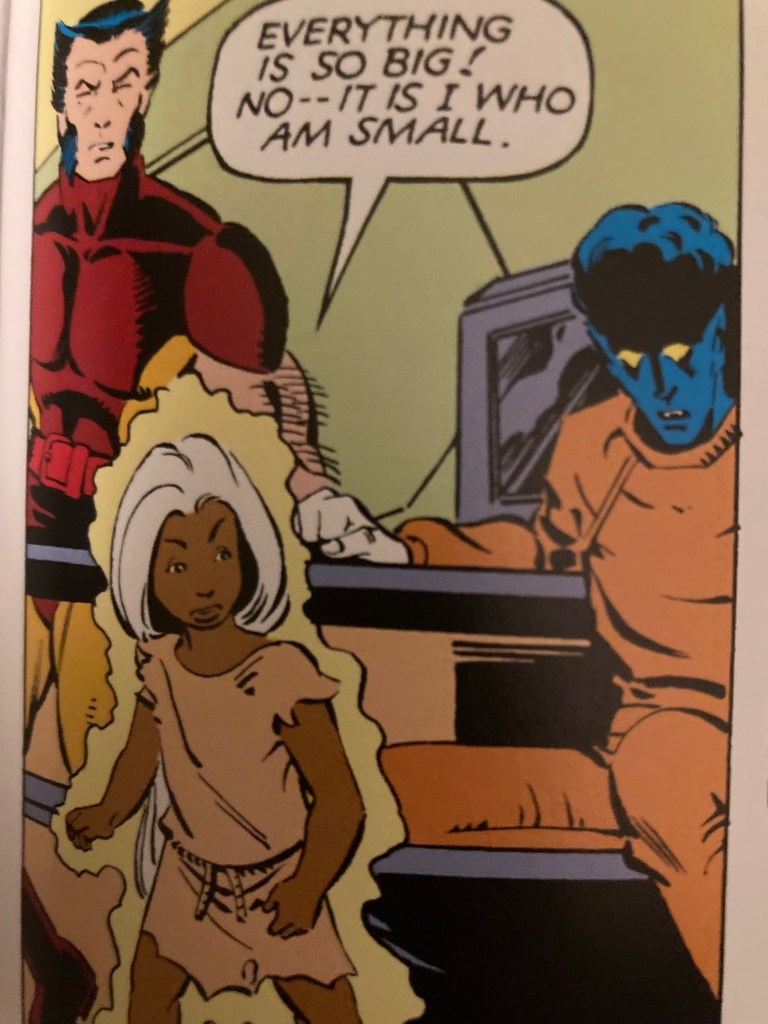
The big Epic Brood saga definitely positivey really we-mean-it honest ends with this issue – which also sees the X-men return to Earth and meet the New Mutants. And take on seemingly the last of the Brood, inhabiting Professor Xavier himself.
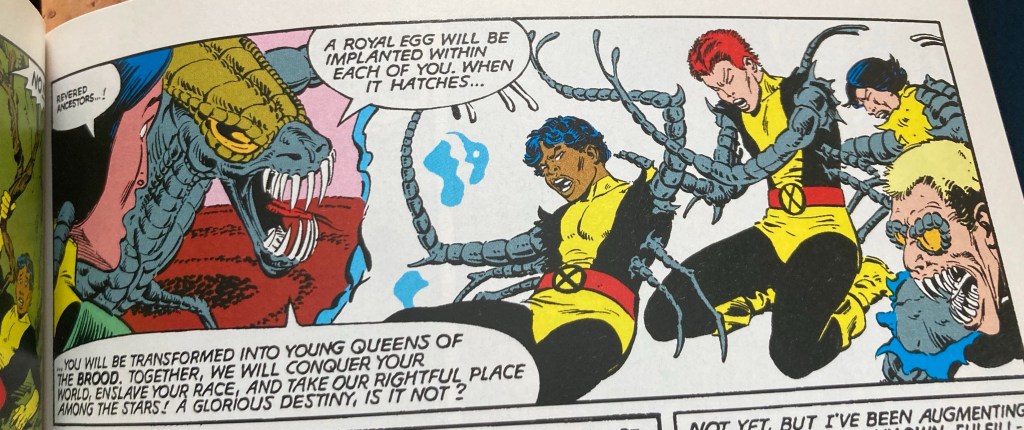
The issue moves at a fantastic pace, and milks the Brood for a few final creepy moments. Not least the seemingly final transformation of Xavier. When he slumps in his chair, it seems like a terrible irreversible moment.
It turns out to be not only reversible bit the beginning of a reinvention of Xavier, taking him out the wheelchair. One of the mantras about comics – being an ongoing medium that has spanned decades is that the stories should give the “illusion of change”. But one of the fascinating features of the Claremont Run is that he makes change seem real. The characters are so well defined that any developments feel important. Xavier stands up (briefly) here and it feels big.
Alongside the defeat of the Brood, the issue is full of brilliantly written tiny moments that help define the characters of the X-men and the New Mutants. I could pick half a dozen, but I’ll just focus on this one that says so much with so little and some striking Paul Smith Pop Art.
Fun Panel
All Hail The Fantastic Paul Smith Point
None More Claremont
Another beautiful Paul Smith drawing, capturing some lovely Claremont moments. These aren’t the sort of grim/gritty heroes that were to become popular in the Eighties. Nor are they the earnest heroes of the golden age. These are just sweet characters you’d want as friends.
Another issue, another story. And this time the new X-men Spin-off title is tying in with the story in Uncanny X-men. It’s New Mutants versus Brood. And, it seems, New Mutants rebelling against Professor Xavier.
Thanks to the crazy world of scheduling – by the time this issue came out – Uncanny X-men 167 had been released, where the X-men return, meet the New Mutants and defeat the Brood infected Xavier. To readers at the time, this must have felt a bit like a prequel.
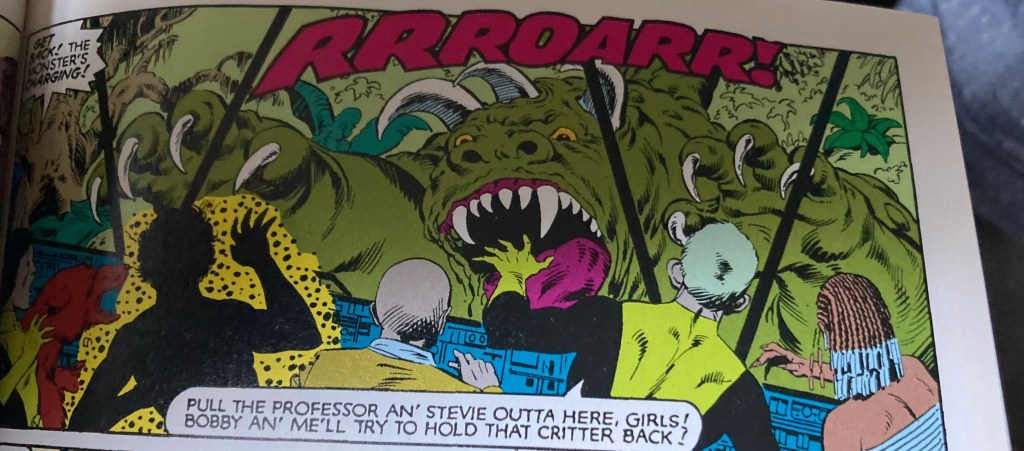
But aside from just setting up the Brood finale, there’s a really nice plot here for Psyche (urgh! still hate that name – when, oh when it it becoming Mirage). She is tormented by a Demon that might not be real, she learns to be wary of Xavier, she ropes in the New Mutants in secret and they take on a Monster that suggests her power potential is much greater than she realises.
The fact that the New Mutants secretly rebel against Xavier is a nice dynamic in this issue – and sets up nicely how this title is going to work. It’s rarely going to be a tale of them learning to use their powers under kindly Professor Xavier. Instead its going to be their adventures as a team. Distrusting what they are told to do and striking out on their own. That is a set-up with a lot of potential.
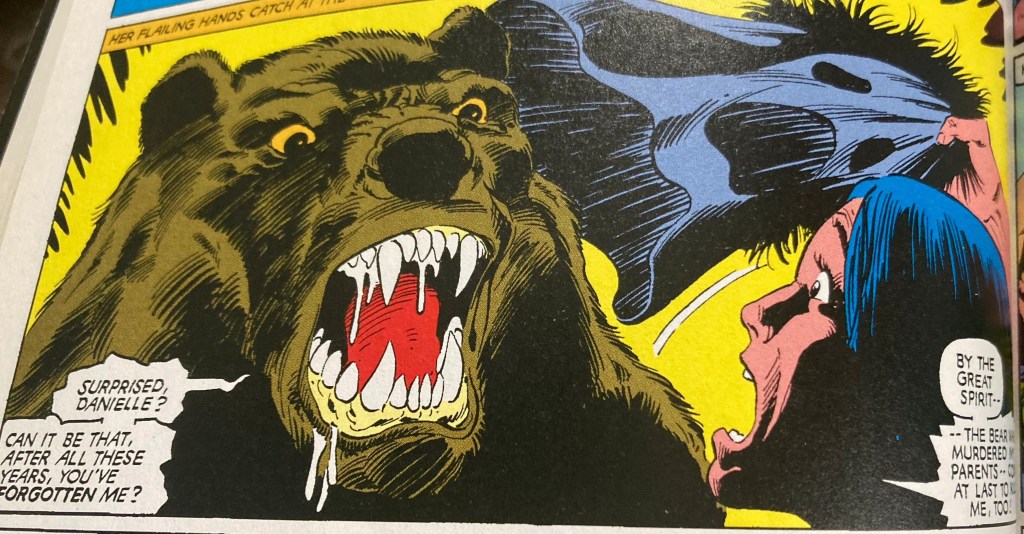
Fun Panel
Despite its obvious Nightmarish qualities, McLeod doesn’t really amp up the Horror Comic nature of the opening sequence. Which does mean it ends with a moment of Pure Scooby Doo! The Nightmare phantom is unmasked! Its only the Caretake Bear who would have got away with it were it not for those meddling kids.
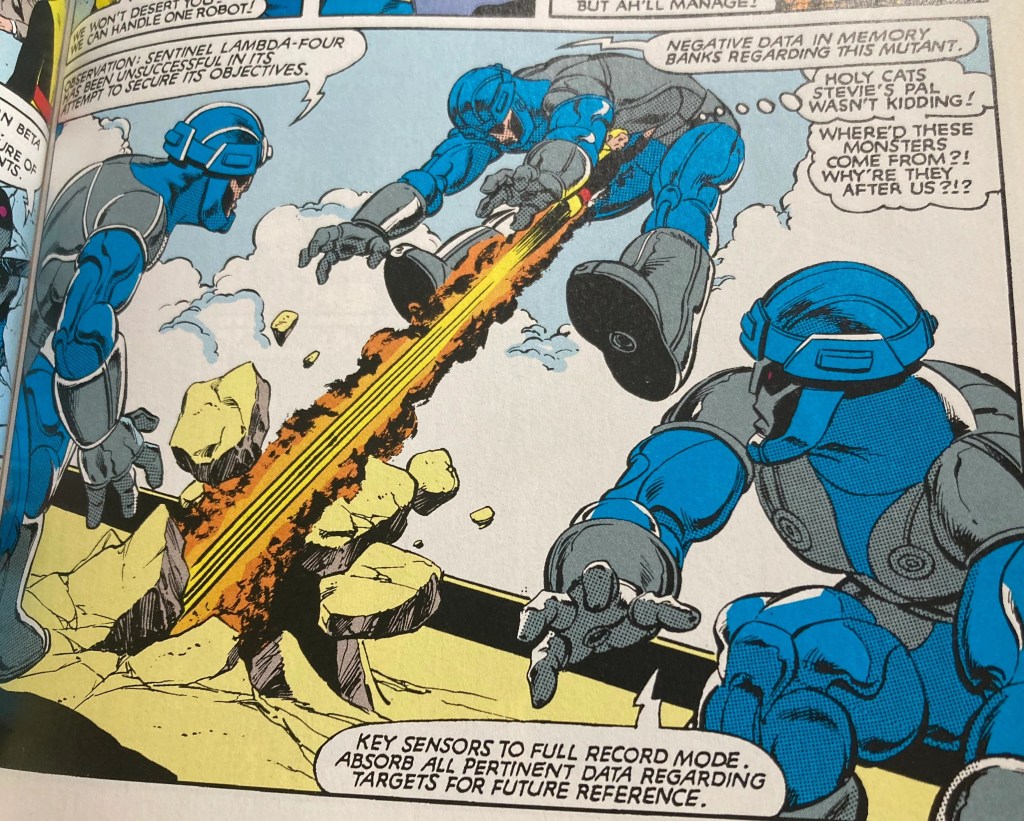
It’s a new team of Mutants, and like all new teams they have to face the baptism of fire that is taking on the Sentinels.
After the deliberately low-key first issue, the scale of the storytelling becomes noticably bigger this issue. Whether its the scale of the world within the Danger Room that Dani Moonstar explores, or the rumble in the shopping mall, there’s a scale here thats impressive.
It especially good for McLeod to be able to show off his skills at drawing on this scale. He hasn’t been given the opportunity to cut loose like this so far, and its a reminder that he can do so much more than the more basic, restrained, low key peril and character interaction that has defined the title so far.
And it also reminded me that at this stage Dani Moonstar is not Mirage by Psyche. What a dreadful name. Indeed its only in this re-read that I’ve realised that the team don’t get the names until the text boses in issue one. Which is a shame – it really feels like a missed opportunity to have these kids, learning they could be heroes, create or embrace their code names. Or even a scene where they are assigned (and as teens inevitably kick against it). I have no recollection of what Psyche turns into Mirage. I guess a reason to keep reading.
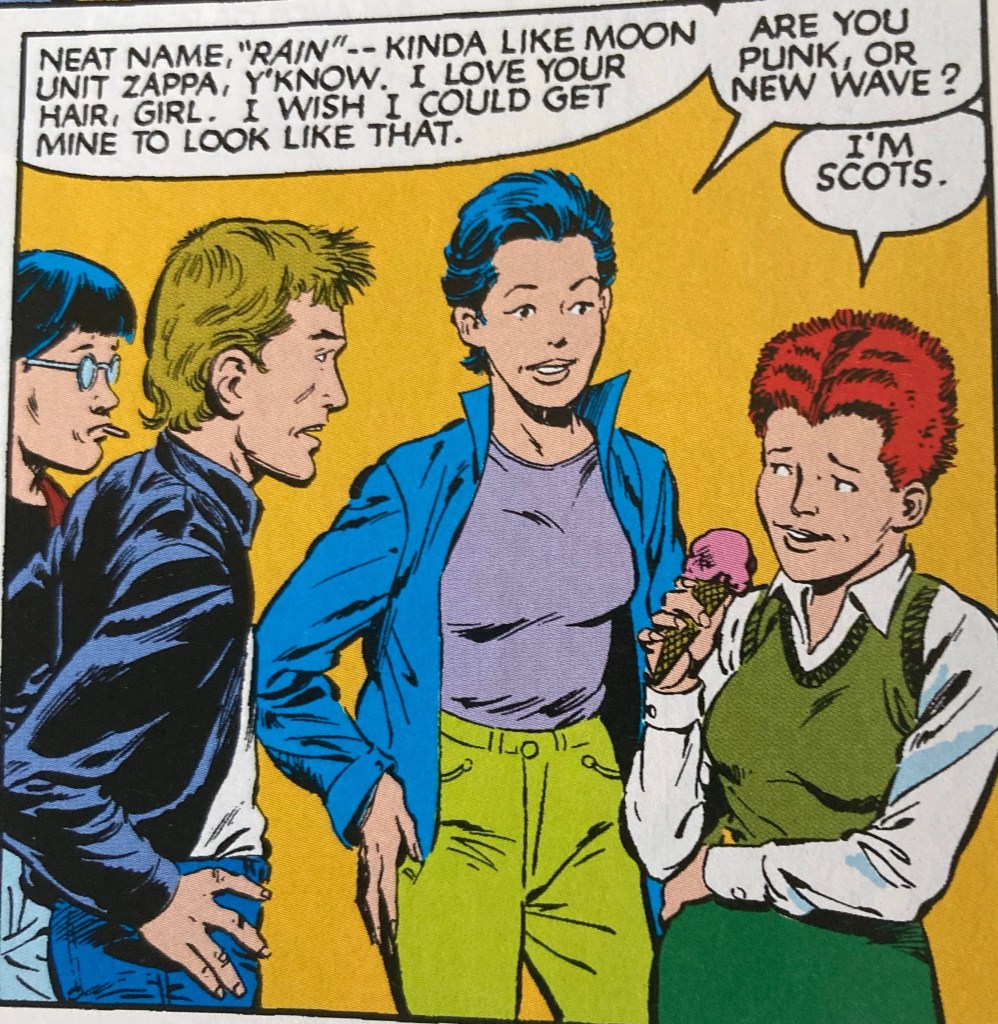
Fun Panel
I had never come across the name Rahne when I started reading the comic. So my brain iervitably defaulted to think it was pronounced something like “Rani”.
And now it doesn’t matter how much I know that the name is meant to be pronounced “Rain” – I still immediately read it as “Rani”.
One day I might get it right immediately, but I fear it might be too late for me. Too many years reading comics with “Rani” Sinclair in it has wired my brian to default to that name. Maybe this re-read will change things.
It’s an all-new Issue 1, for an all-new X-title. And from the outset you can tell they are trying to downplay things. This is the lowest level Issue 1 of a superhero comic I can imagine.
It starts with the team gathering round to watch someone get a haircut. Before we get re-introduced to the Danger Room. And finally a hint of danger for one of the team as she secretly attempts to cross the Danger Room, and someone seems to be turning the safety protocols off.
The issue does do some low-level threat-building. We learn that Xavier has a son he doesn’t know about. And we learn that elements of the US government are keeping an eye on the Xavier mansion. But neither of these remotely suggest a big blowout is just around the corner.
Fun Panel
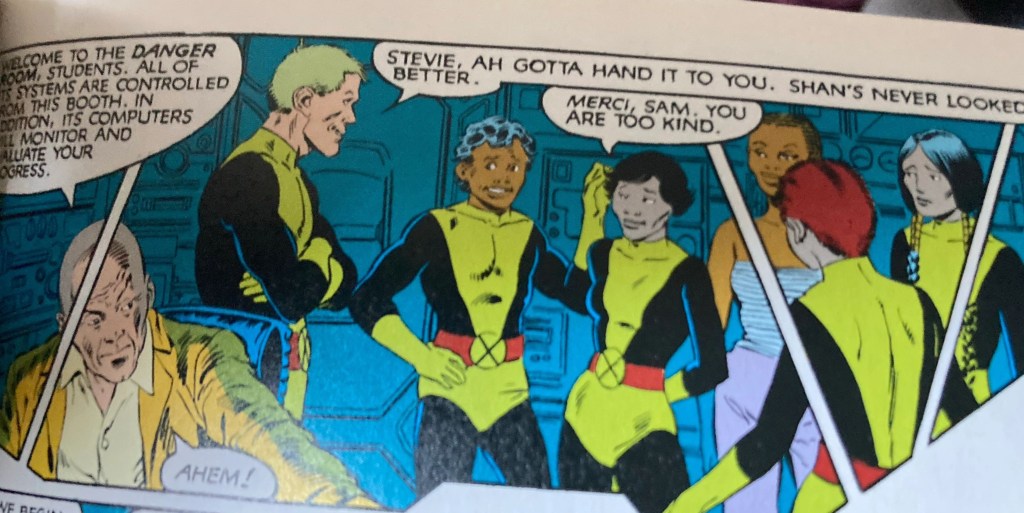
The super new holographic Danger Room gets revealed here – in what is probably the biggest conceptual moment of the issue. From now on the Danger Room isn’t some Work Out room dialled up to eleven – its a super sci-fi cliche of a holographic world creator that just might kill you.
Like the Holodec in Star Trek I always find these totally immersive holographic environments slightly dull, story-wise. It’s an easy way to drop in new environments but I miss the travelling to new environments and the “is it potentially going to kill you” schtick gets old pretty fast.
Still, I love the reveal in this fun panel.
None More Claremont
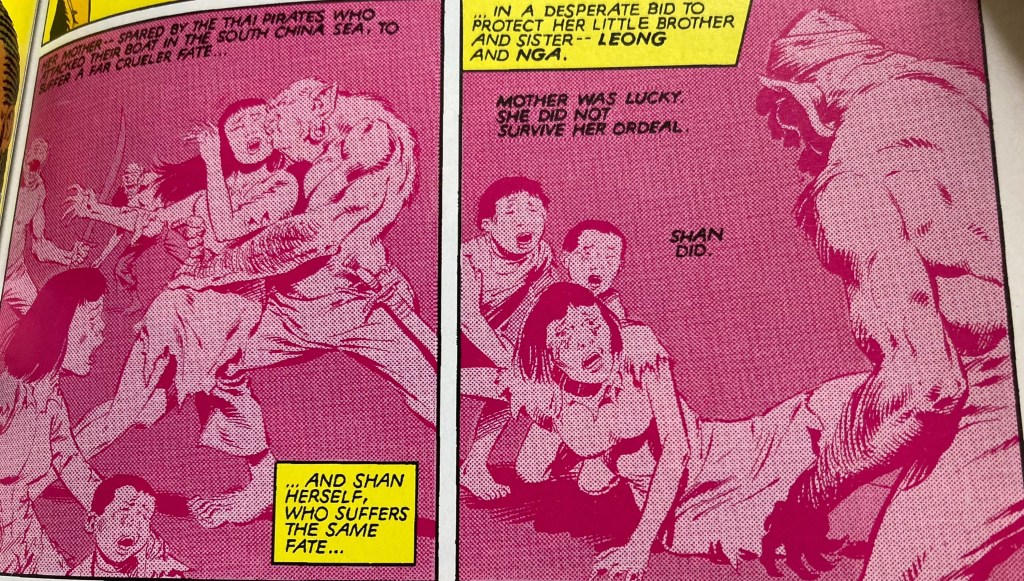
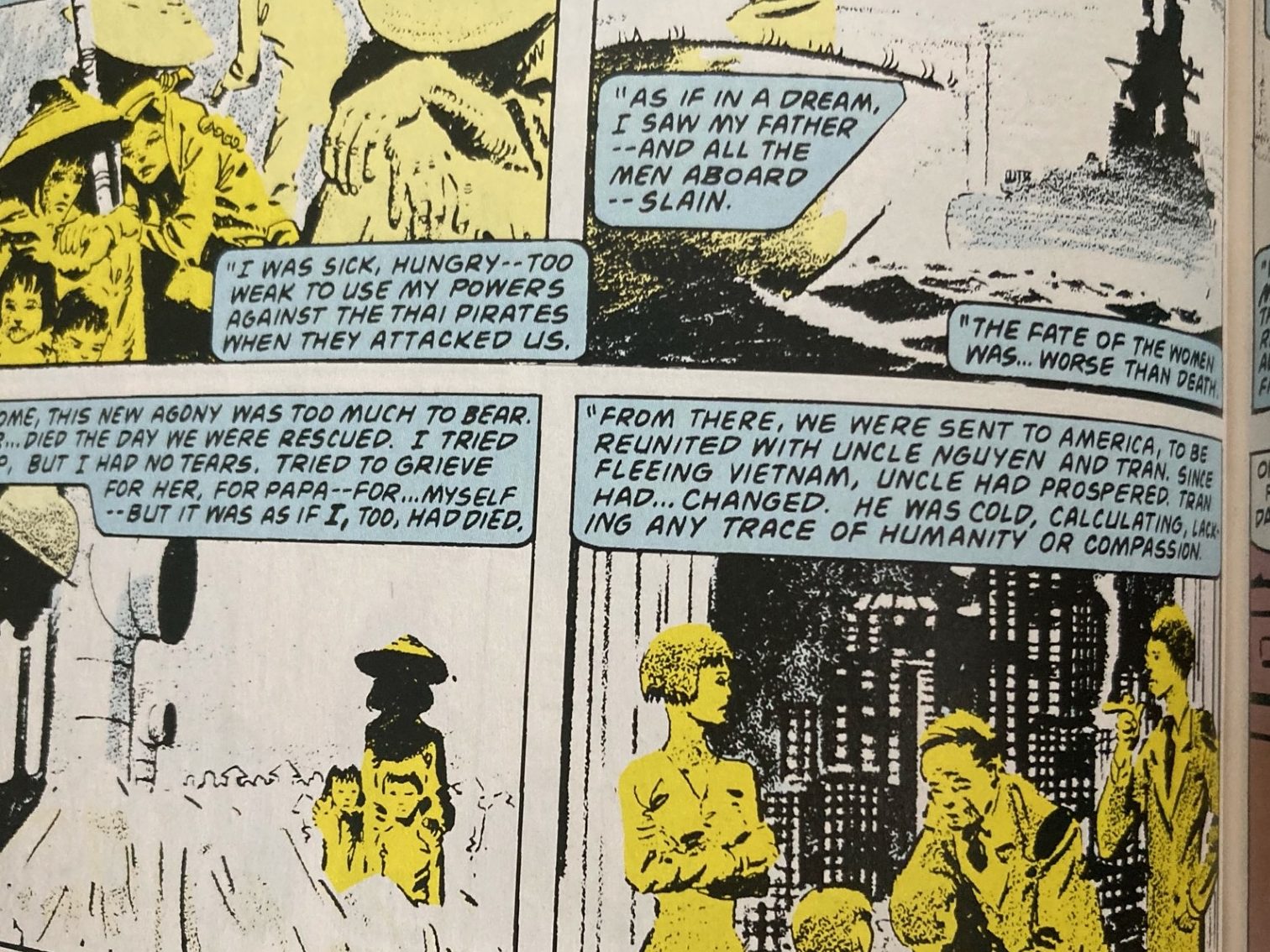
I’ve mentioned how low-level this issue is, but on one level that isn’t really true. This issue drops quite a bomb when it comes to one of the characters. She has a dark past – that involves rape and sexual abuse. Narrated as clearly as could be done under the Comics Code.
This is all stuff that is taken from her debut in Marvel Team-Up Annual 100. An issue where Spider-man and the Fantastic Four discover Karma and learn of her backstory. The darkness of it emphasised by Frank Miller’s inventive visuals.
This is serious ground for comics to tread, especially as it can be brought in as a lazy way to make things seem more grim/gritty and serious. The fact that this side of her story is so heavily emphasised in Issue 1 of a brand new title, in probaby the issues most dramatic moment really sets up the idea that for this comic this story will be incredibly important and its exploration at the heart of the comic.
It’s a shame then, that this really doesn’t become the case. Of all the New Mutants, Karma is really let down by Claremont in terms of character development and story-telling. As I go on reading the run of issues it seems that Claremont is far, far more interested in Magik as a character to explore the themes of post-trauma and abuse survival. And as a result, Mirage pretty much literally disappears. Which is a huge shame
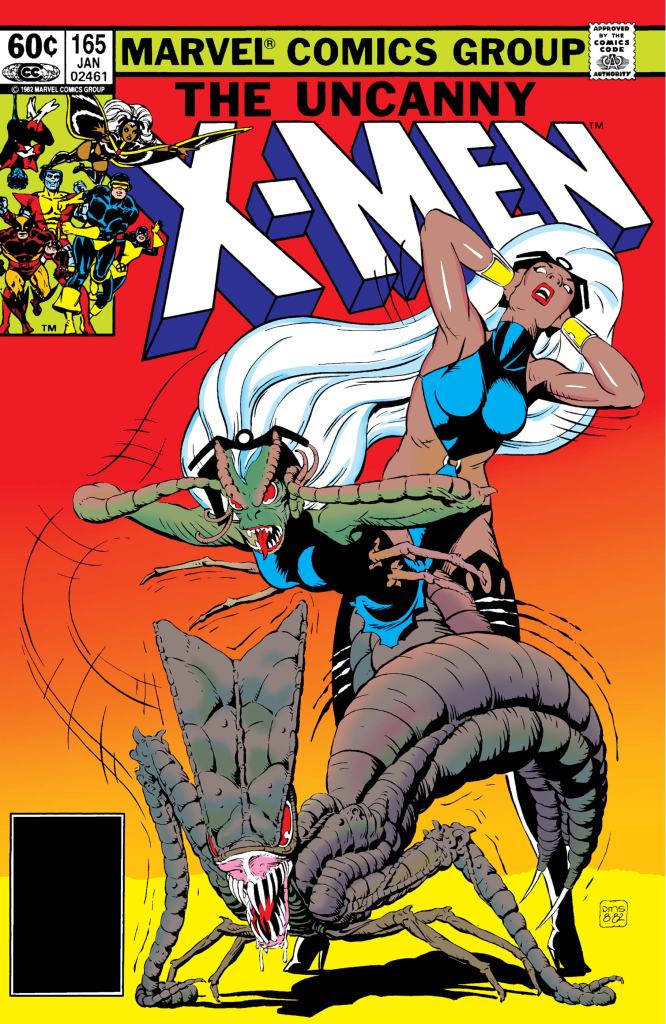
Paul Smith begins his all-too-brief but incredibly influential run on the Xmen mid-story. But what a story! Claremont is building an intriguing and inventive sci-fi tale here, while never losing sight of the fact that the X-men seem doomed.
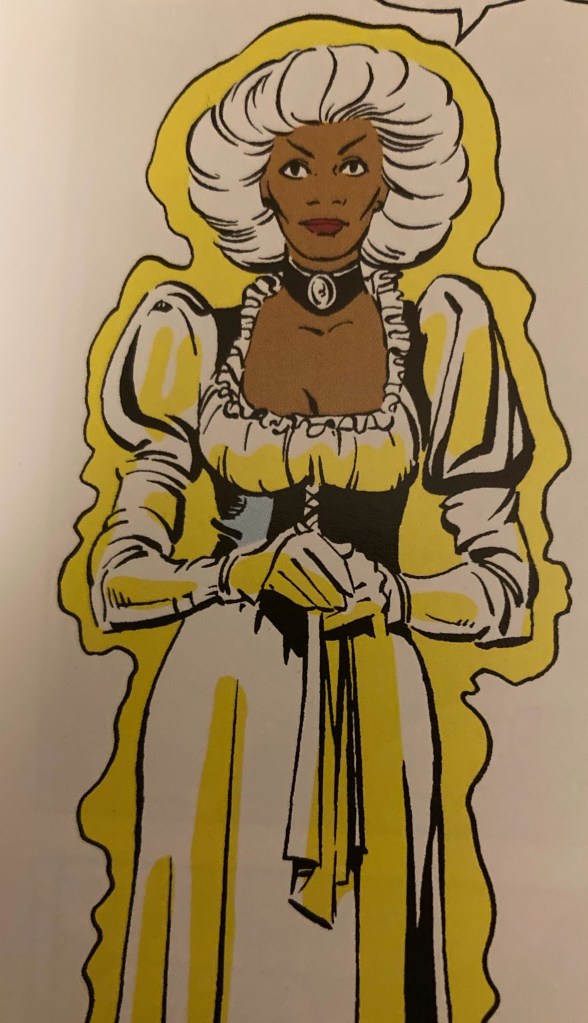
The writing here is especially strong for Storm. She gets a tale where the events are driven by her ideology. By her reaction to a dilemma. A reaction that feed nicely into a Big High Concept Sci-Fi Idea. While at no time ever feeling po-faced or as if we are being lectured by the narrative.
I do wonder whether the film Solaris was the inspiration behind Storm’s attempts to manifest to the crew. It’s a great sequence though, where the mystery of it all drives another beautifully paced issue.
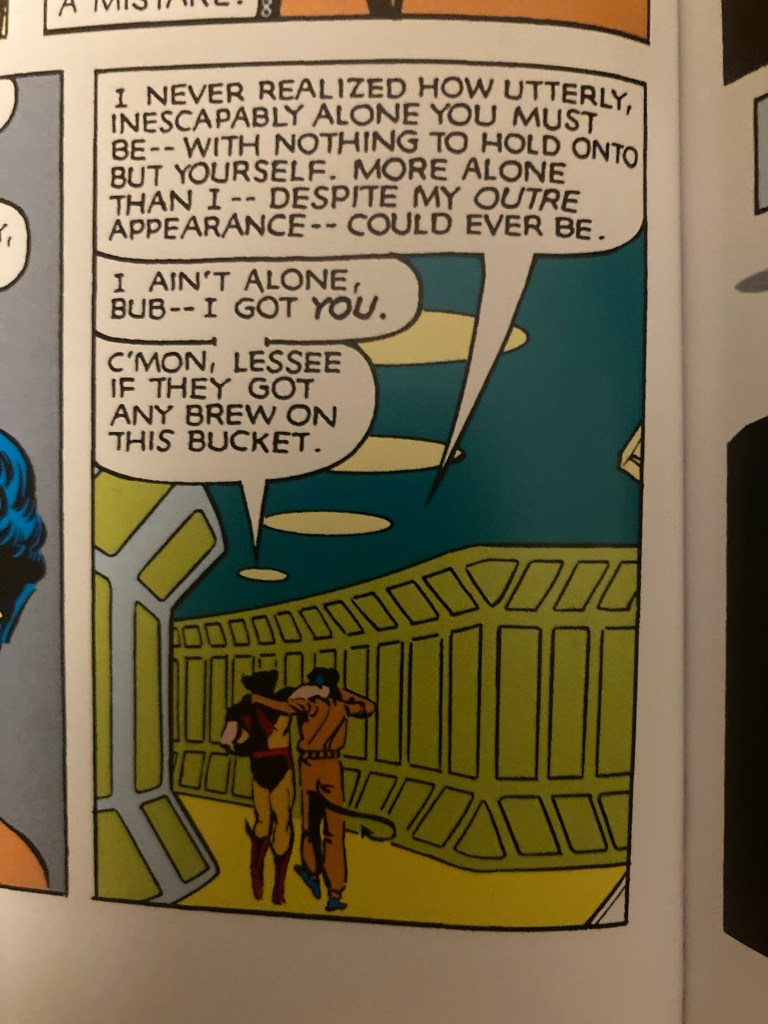
Away from the focus on Storm, we get to see all the X-men face what might be there death. As ever, Claremont uses this to build bonds between characters and we get more of the friendship between Wolverine and Nightcrawler. Some comic writers make their characters friends by having them dwell on what they have in common, but I think this friendship is so affecting because thats not the route Claremont goes down here.
It all builds to a great cliffhanger, setting us up for the finale in a special Double Sized issue.
Fun Panel
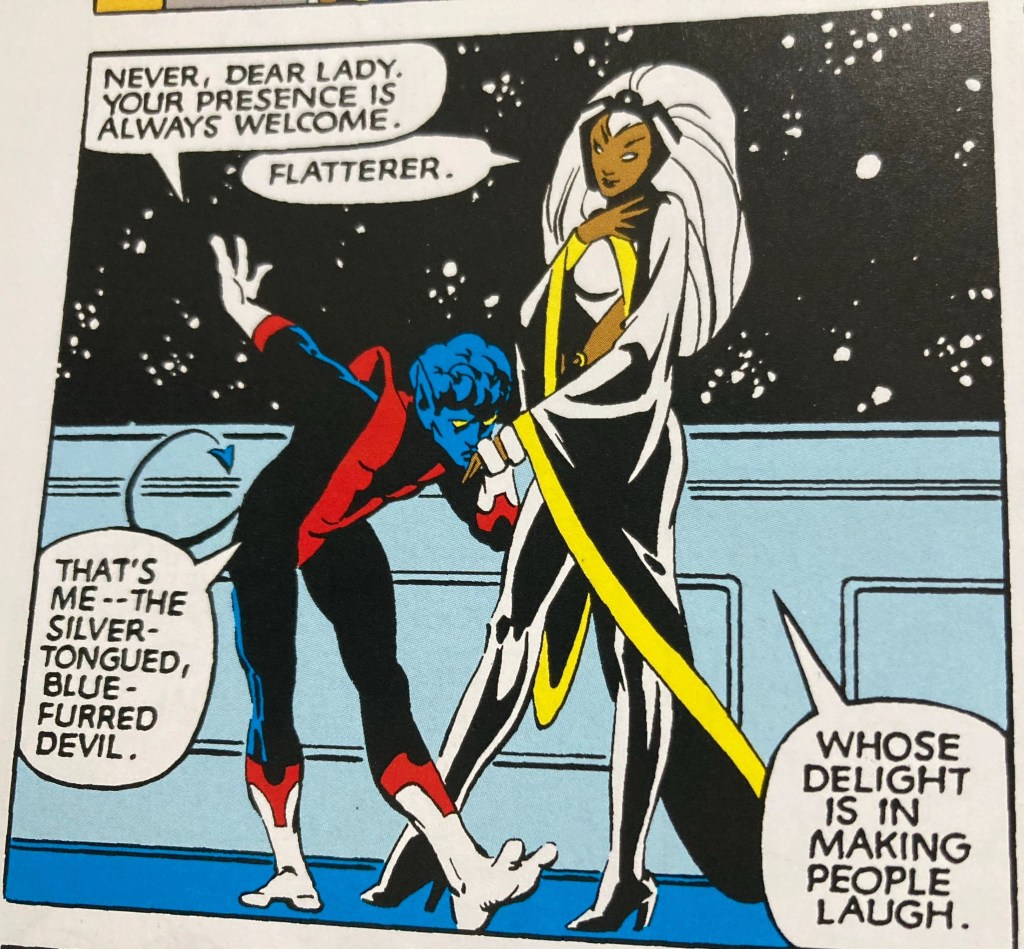
Paul Smith’s art impresses from the off with his simple, colourful designwork. If there’s a minor criticism it is that a few of the panels where characters interact feel strangely static. Not this one though – a beautifully energetic yet dark moment captured perfectly.
None More Claremont
Claremont returns to the teen romance of Kitty and Collossus here, as we see them face the prospect of Death together. This issue goes straight to the heart of their relationship and what feels awkward to read about it. Facing death, Kitty effectively propositions Colossus. If they are going to die, why not? Colossus says No, due to the age difference.
To have a character who is still, in the comics, thirteen years old talk in this way feels like new ground – but new ground that it feels troubling that the comic is breaking into. It’s not an easy moment to read and yet, character-wise it feels utterly genuine. There is nothing unrealistic here, and it feels like it gives us an insight into both characters that could not have been illustrated any other way.
This isn’t treating the matter coyly – or even trying to nudge nudge wink wink to the audience something that would not have aged well at all. Just a genuine scene of human emotions.








 The X Marathon