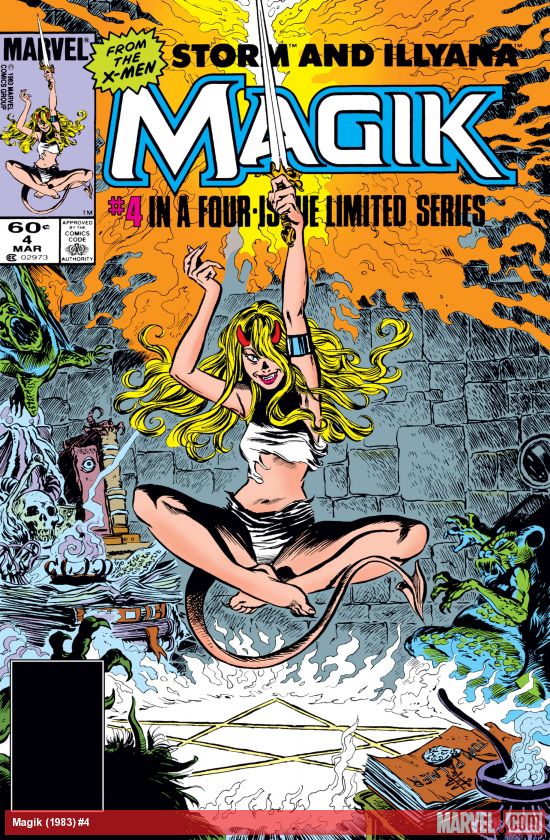
Thoughts
The miniseries comes to a conclusion with the effective birth of the character Magik. On these issues we’ve learnt her mutant power, her connection to Limbo and, in this final chapter, she acquires the soul sword. Conceptually we’ve arrived at the newest New Mutant. Even if she does join that team till issue 14 of that comic. (up next on the blog)
In this issue she finally defeats Belaaco. Which in true pulp fiction format means not killing him. For, as the narration makes clear, if she had killed him she would have just become him.
This is something of a cliche of the genre – and it’s hard to know quite what point Claremont in trying to make here. Would the act of killing, taking Belasco’s life, be so amoral that it would ultimately destroy Illyana. Or is it that, in defeating him and acquiring his absolute power, she would be corrupted because that’s inevitable when it comes to absolute power.
This lack of clarity probably highlights the limits of tackling something as grave as child abuse within the confines of the superhero genre. At some point the storytelling decision will have to be made to *go real* and address the reality of the situation. Or to revert to the comics code approves safety of familiar pulp fiction tropes. And for understandable reasons, the story runs with the latter.
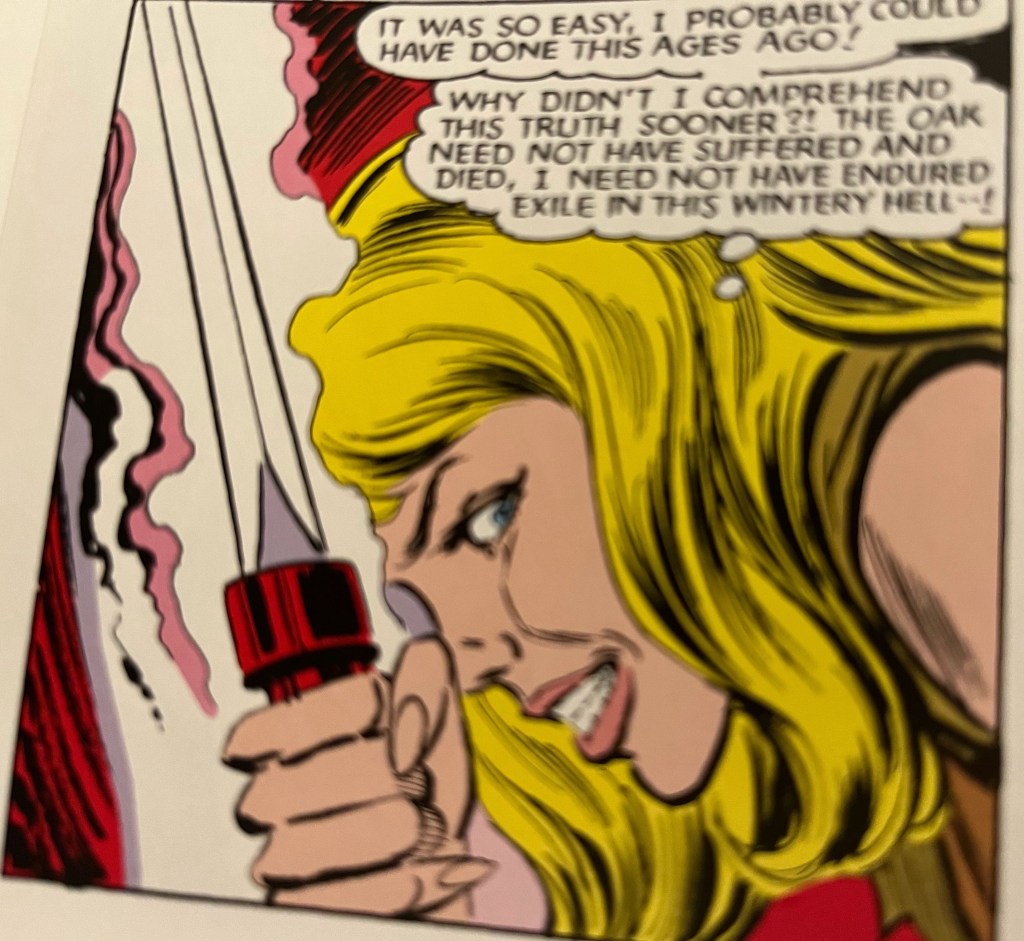
And while this issue heralds Magik into the Mutantverse, the character isn’t quite there yet Once again, Claremont gives her a great deal of narrative work. Her voice runs throughout the story – a smart, meditative teen who quickly understands what’s happening and calmly explains to us the peril of her temptation.
It’s surprisingly dry throughout, maybe reflecting a level of detachment you might find in a scarred and withdrawn individual. But it’s interesting that this take on the character does not last long. In the New Mutants title, and especially under Louise Simonson she becomes far more of a hothead. A damaged, angry character whose grievances lead her to lash out. I think that take on the character works better, and so I miss it here. All too often her internal monologue seems Scott Summers-y in its measured nature.
I feel that this blog, though, has been probably a bit too negative in tone given that I thoroughly enjoyed this issue. Overall this series has taken the franchise into a wholly new place, created a fascinating new character, and told a rich and multi-layered story with an ending which, like all great origin stories, sets up further stories I really want to read.
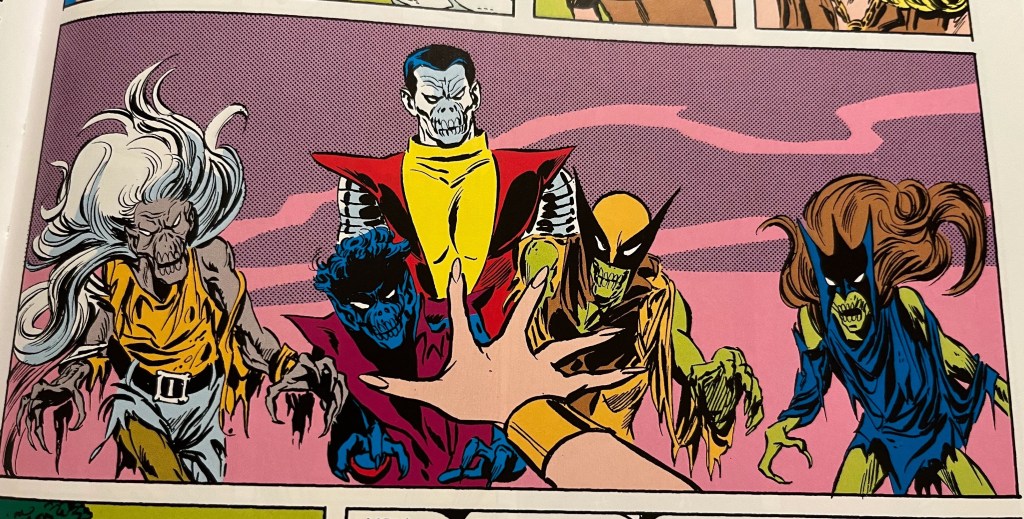
Fun Panel
As regular blog readers will know – I’m a sucker for team shots with a twist. And this one’s great!
Any Googling
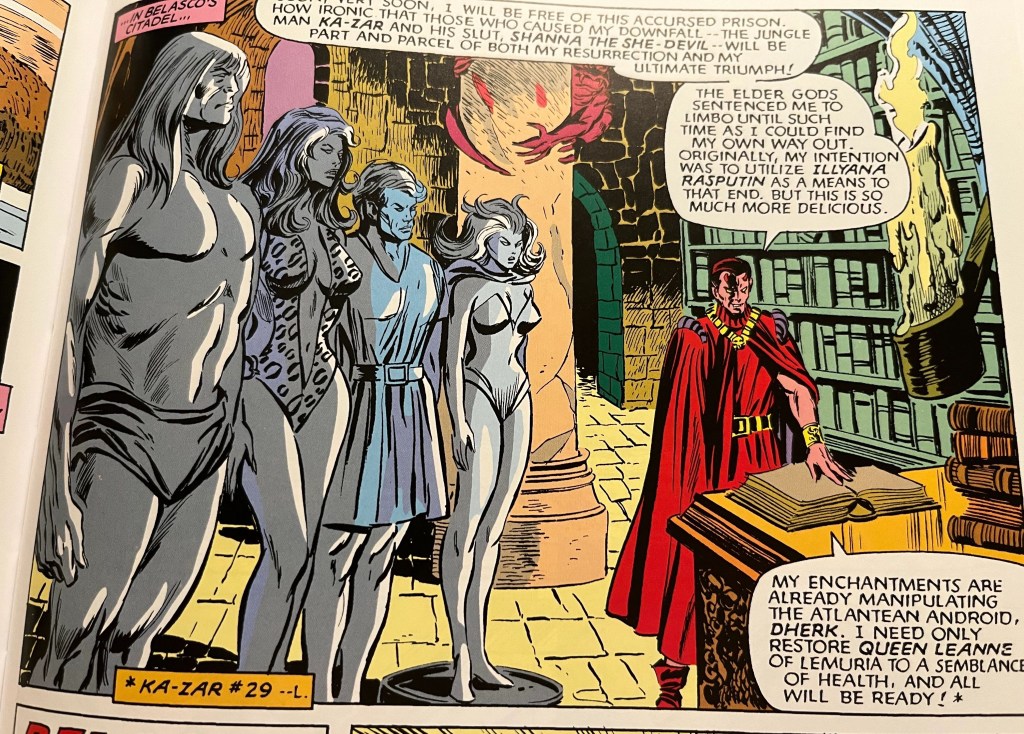
Belasco – the adult demon abuser of Limbo – is a character now so wedded to the origin of Magik that it’s intriguing that he was not created for this purpose. Instead he was originally created as a villain for – of all people – Ka-Zar.
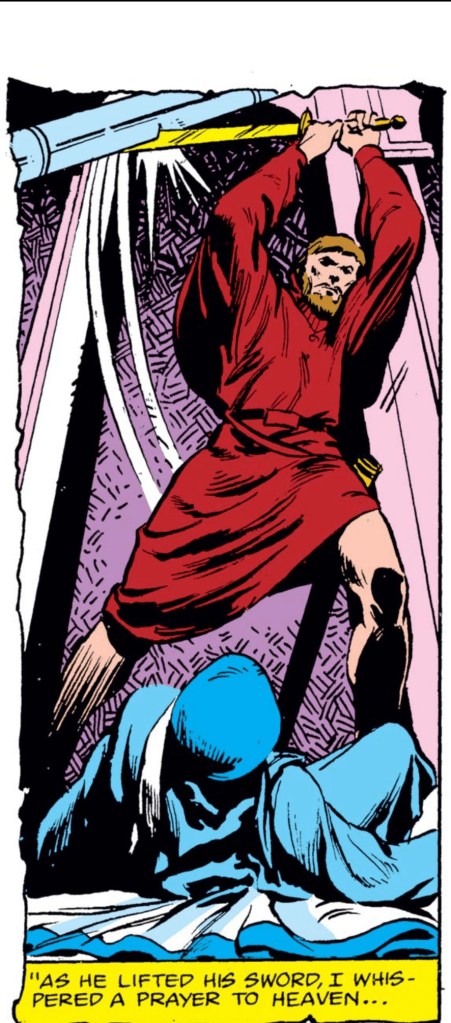
Reading his origins issues in that Ka-Zar run it’s striking quite how barking mad this title was. It clearly wore its pulp trappings with pride- delving into mythical medieval adventuring with such abandon you begin to suspect the writer didn’t quite know what to do with the basic set-up of Ka-Zar.

Belasco is introduced as a mortal man, albeit someone dabbling in dark magic. In Italy around the time of the poet Dante. Who becomes something of an antagonist to him. Their struggles leads to Belasco getting frozen in ice. Only to be woken in the modern age, looking more demonoidic (yes, that’s now a word). And indulging in some cliched Vampire-style beautiful lady hypnotism.
There he is thwarted in his attempt to summon the Eldar Gods. And is seemingly defeated, thrown burning into a chasm.
From which it seems Claremont decided to resurrect him for his appearance in Uncanny X-men 160. It seems an interesting choice rather than, as must have been an option, create a new character for the role.
I guess there is enough in Ka-Zar’s tale about female corruption, bloodstones and Eldar Gods to make it work in Magik.

The one thing that reading these Ka-Zar Belasco issues highlights to me, though, is how much better Claremont is at writing this type of tale. In Ka-Zar he is at best a third-rate Dracula in some shonky b-movie plotting. Whereas here he is a darker and far more credible danger.
 The X Marathon