Thoughts
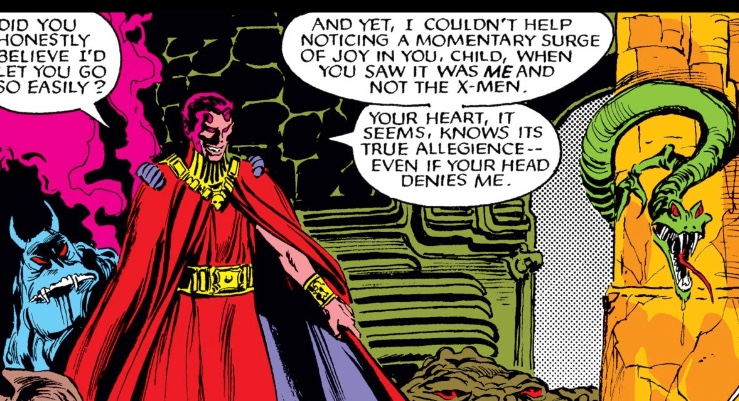
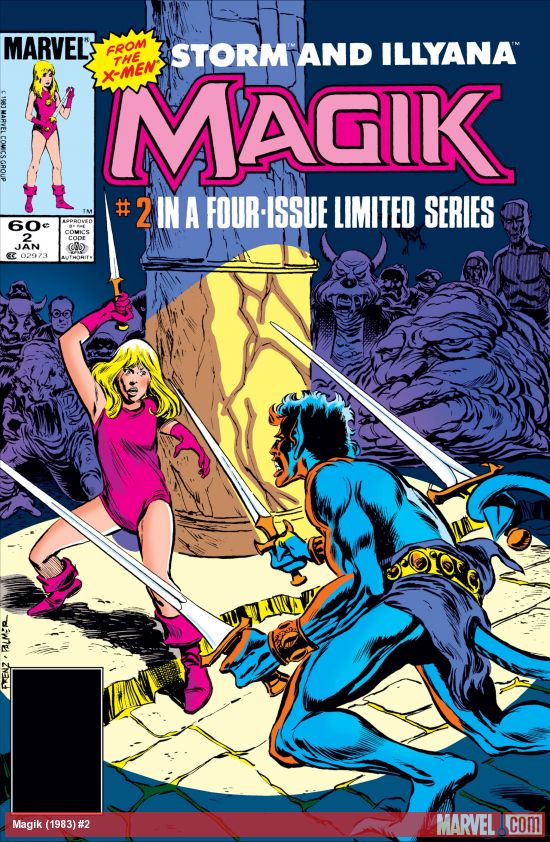
Claremont’s darkest storyline yet continues with more suppressed evil and hints at something truly terrible. Alongside a couple of allusions to rather viscerally gory things.
Magik’s role as narrator here is quite striking, but also surprisingly dry. One of the elements that develops with the character is her hot-headed nature – her potential to be wild. Alongside trying to deal with her trauma. But here her narration feels somewhat robotic. It’s so matter-of-fact, a first person narrative removed from the character of the person telling it.
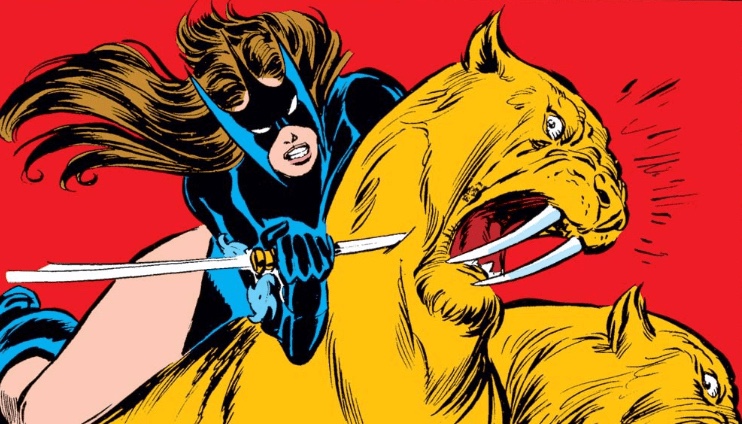
There’s probably an element of disassociation here. Magik dealing with her trauma. But at the same time this level of neutrality in the text just makes it a bit dull. There’s no greater indication of this then the fact that in this issue she spends most of her time with Cat, the feline bestrial future limbo form of Kitty. Kitty, by the time of her reflection, is her closest friend. And yet none of that seems reflected in the narration. Which feels a shame.
Claremont is very good at the dry, detached third person narrator – and also at the in-character narration. But here the mix doesn’t quite seem to work.
This gripe should detract from the overall quality of this issue, though. Which continues to explain the mystery of Illyana’s missing years in a fascinating way. The Hellish Limbo is a genuinely unsettling place, and the scale of the imagination behind it is brilliantly captured in Buscema’s art.
I’ve also waffled on about Magik quite a bit here and on the previous blog. And yet this miniseries is also headlined by Storm. And the end of this issues seems to be be setting up her next move. I’m hooked to find out what it is.
Fun Panel
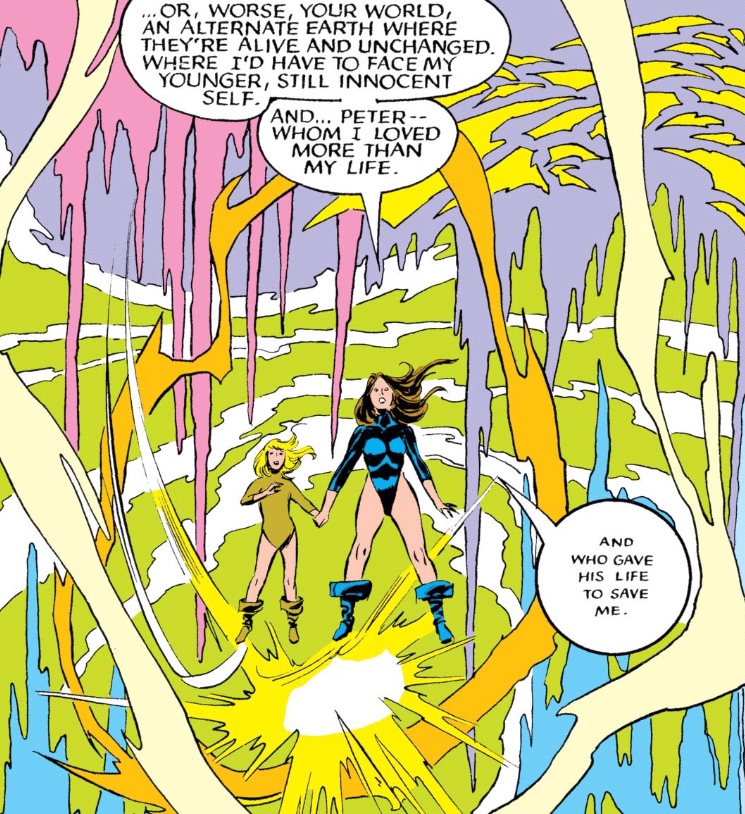
John Buscema is having a whale of a time in this rich, fantasy version of Hell. But especially when it comes to the trippy gateway to leave it.
Any Googling
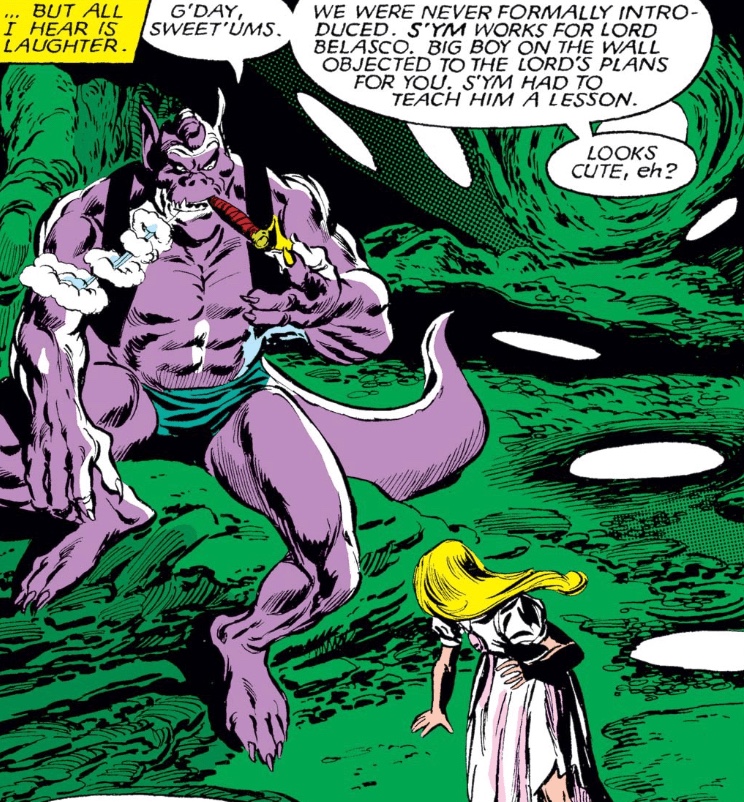
S’ym, the cigar-smoking Demon from Limbo is set to become an increasingly important character as the story of Magik unfolds. It’s quite a distinctive look, and Google suggests that the origins of the character in a homage to David Sim’s Cerebus the Aardvark.
It’s quite an odd homage. It’s understandable that the title might want to reference one of the most popular alternative titles at the time, an indie success that would have seemed like a very cool name to drop. The character seems to scho some of the speech and visuals stylings of the cult aardvark, without becoming close enough for Marvel to have to pay out.
But there’s probably also an element where this is a bit of revenge. In an earlier issue of Cerebus, Dave Sim had introduced the character of Charles X Claremont. Who disguised as a woman serves as a headmistress at the “School for Gifted Debutants”

There’s often an element of good-natured ribbing in such cameos, although in this instance there may be something slightly more venomous. Sim stated he wanted to mock Claremont’s tendancy to ask why any new character being created couldn’t be a woman. Sim’s subsequent more controversial comments regarding woman being “voids”, empty of creativity against men, who are creative lights. Goping on to sneer at men who he felt were dominated by their wives, in a manner that seems all to relevant these days.
Meanwhile S’ym never stops being a morally repugnant villain. Although probably to avoid legal matters has never been presented as the recognisable incel-style misogynist.
None More Claremont

This issue brings back (and kills) the twisted version of Nightcrawler. The wicked character from the earlier issue of X-men that tried to sexually assault Kitty. Whereas that appearance raised very difficult questions as to how much this behaviour was innate to the character, or an abherration added by Belasco – this issue suggests a possible get-out for this quandary. When the older limbo version of Kitty tries to attack Belasco, he simply gains control of her body and turns her into a full on feline character. He isn’t revealing any hidden nature within the character, just destroying her and replacing her with something new.
It makes this horrible Nightcrawler easier to accept. But this “how much evil truly lurks in the hearts of good people” is a question Claremont repeatedly comes back to. Without ever fully addressing
 The X Marathon