Thoughts
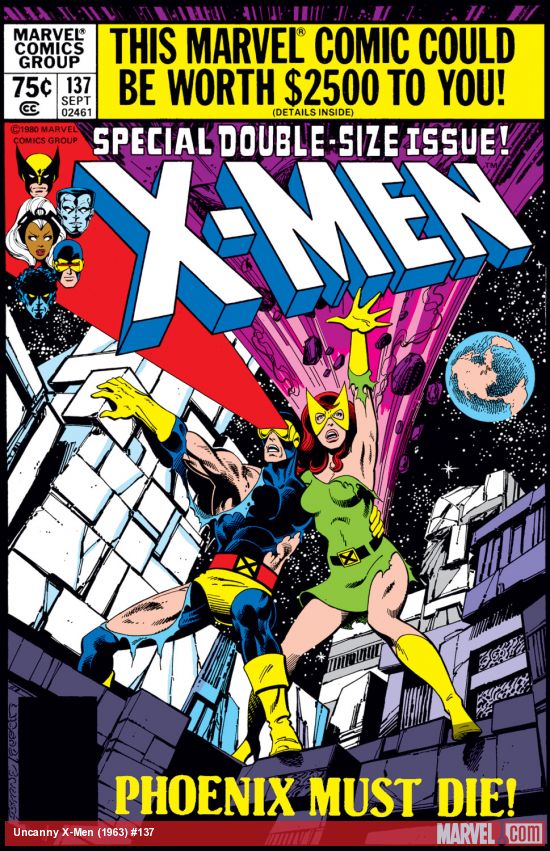
I’ve mentioned before that a couple of these Claremont/Byrne multi-part stories seem incredibly cinematic. Ironically this issue, heralding the end of the Dark Phoenix storyline, feels far more like a season finale.
From the cover, to the opening narration, the issue sets up that you’re going to read a conclusion here. And as with a finale, not knowing the Epic Fate that you’ve been told is coming is the driving force of the issue.
Plot-wise, there’s a huge amount of spinning wheels. The X-men have been transported to Outer Space where a united front of Cosmic Forces have gathered to deal with the Phoenix. We’ve got this far by the fourth page, and what follows is an exercise is setting up a slugfest to fill-up the pages.
Thanks to an incredibly convenient Shi-Ar law, Xavier declares that before Phoenix can be condemned by the Galactic Court, they have a right to basically do a bit of fighting.
This sets up a couple of sections that play to Claremont’s strengths as a writer. Firstly all the X-men have one night before the big Nonsensical Justice Fight, and this downtime is used to give us a moment with each of the characters.
Then we get to a Absurd Trial By Slugfest, and Claremont has fun pitching the characters together.
Both sections are pretty good, although not the best examples of Claremont’s character-building downtime nor inventive comic-book combat. But the excitement is sustained by that finale feeling – that everything is heading for a Big Ending.
When it comes, it doesn’t disappoint. Over many issues we’ve known something big is coming, and so when it does it feels even more Epic. And it works for the character, too.
Fun Panel
Another nice dynamic team panel – with Phoenix centre-stage.

That Don’t Make A Lick of Sense
“Arin’nn Haelar” is honestly just gibberish. So, under Shi-Ar Law, facing a trial a character can demand a duel of honour. And even though the stakes are such that the Universe is at stake, it is granted. This is pure contrived Pulp Sci-Fi – where the civilisations in Space are full of the arcane rituals that fifty years earlier would have been the domain of Pulp Adventures in Johnny-Foreigner Land.
None More Claremont
The ending of this issue is insanely verbose. Not only do we have the Watcher insisting on telling us what a huge event we’ve just witnessed was, in dialogue straight out of a portentous fifties Sci-fi film where stentorian voices expound absurdly trite philsophy. But even Phoenix’s death is undercut by having Cyclops patiently explain to the reader how this suicide has clearly been planned all along.
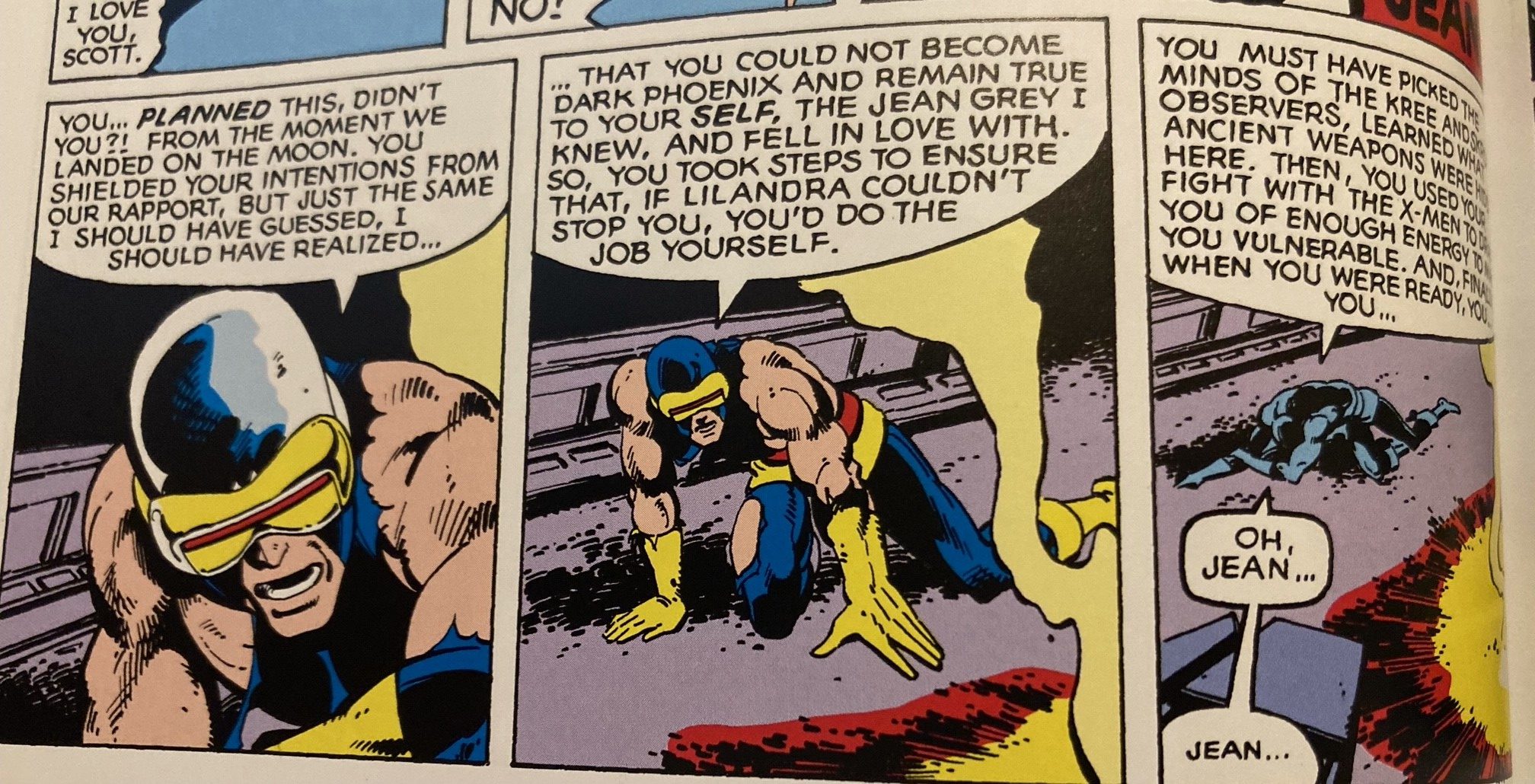
Also, and this is possibly an illustration of how the Claremont/Byrne partnership was maybe starting to fray – the key moment that brings back Phoenix happens off-panel. We’re told about it, with more words. Seeing Cyclops overpowered is – according to the text – the trigger. According to just the visuals it just happens – the inevitable final stage of this conflict.
It was a Product of its Time
The ending of this issue was down to an editorial decree – Phoenix had killed billions. She could not be allowed to get away with that. She had to die. The Omnibus volume reprints the original ending, where Phoenix simply has her mind wiped to erase the connection with the universal power, and a seemingly-permanently comatose Jean Grey is taken back to Earth by her friends.
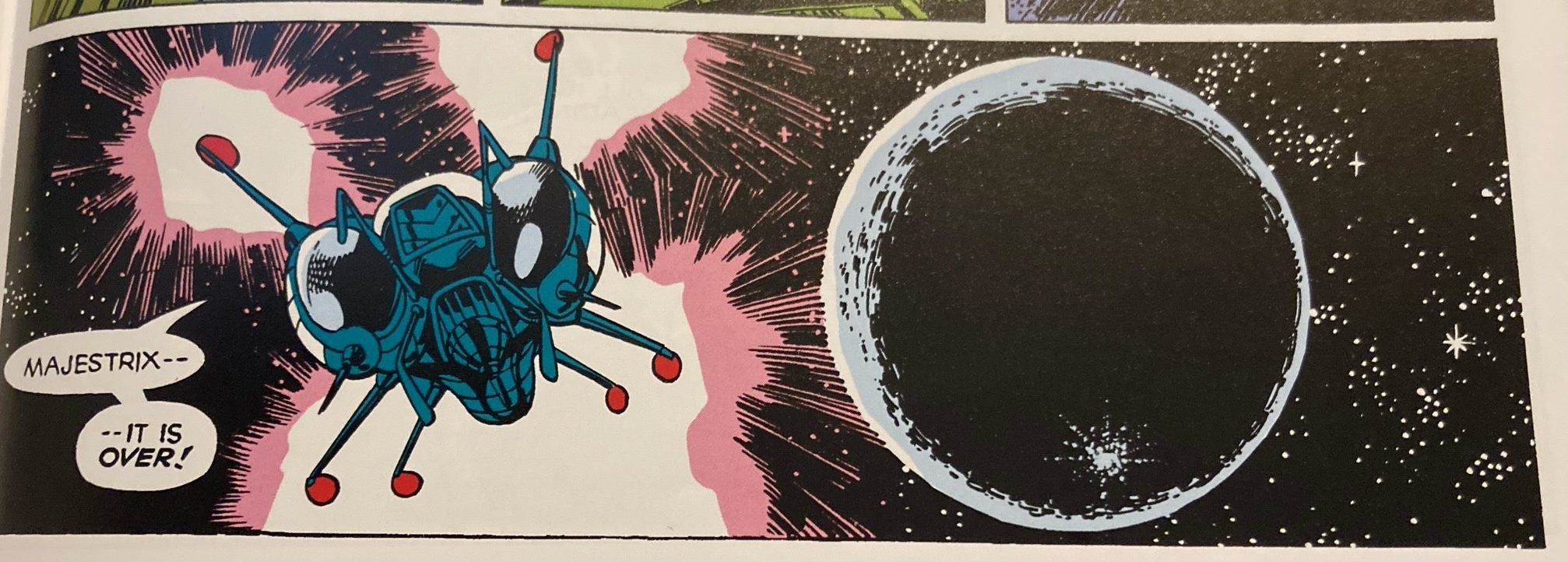
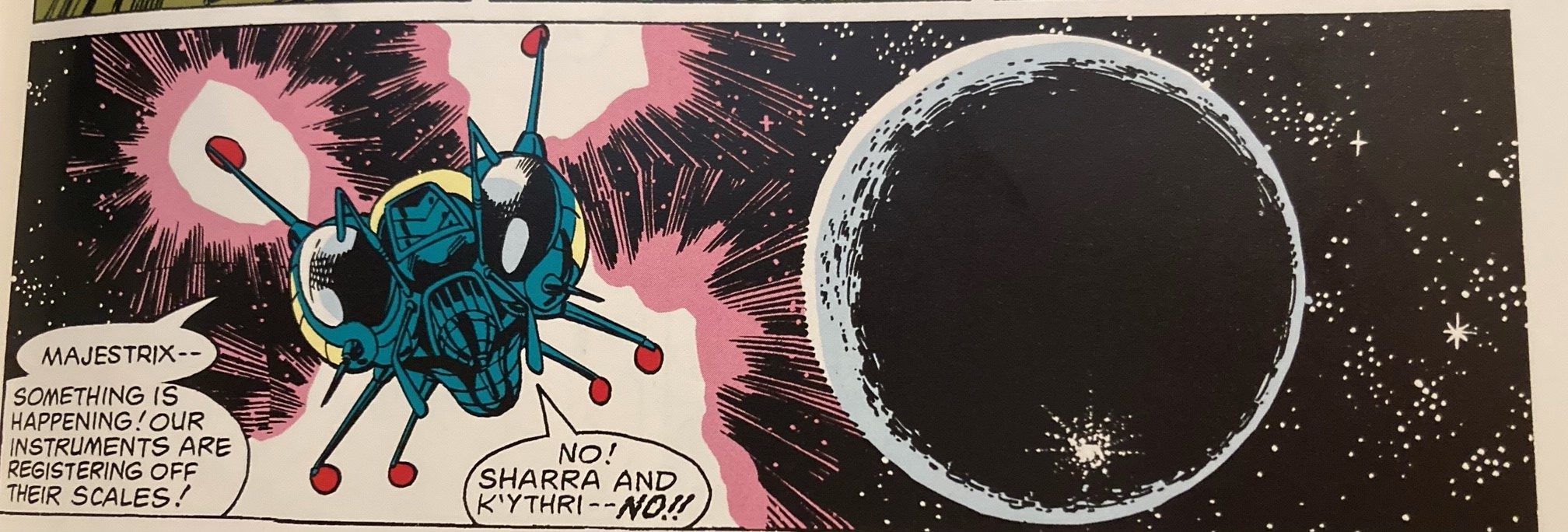
It’s an odd issue – you can spot the moment of the change, where the same panels gets different speech bubbles to massively different effect. And the sequence feels much less like a season finale, merely just another issue. OK, Phoenix is going to be gone for a bit, but the capacity to bring her back whenever the writers might fancy to is all too obvious.
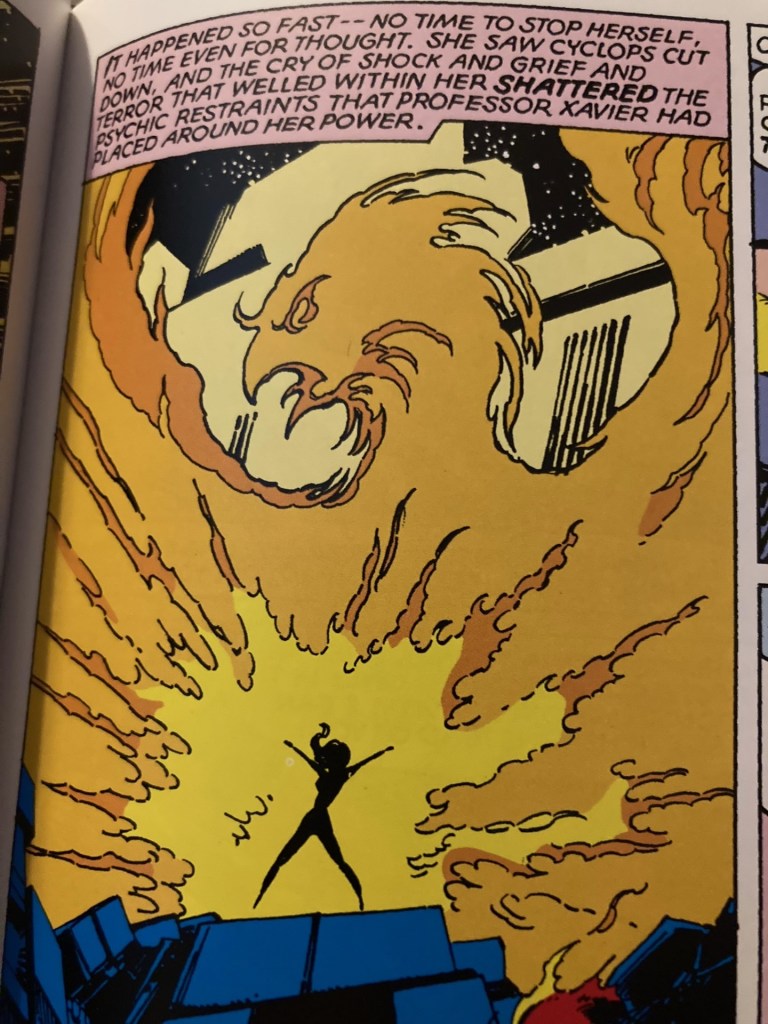
The editorial line that cost Jean her life is an interesting moment where the editorial line is more about the Comics Code than pure profit, or even keeping a popular character around. Some distance further down the line with this blog we’ll see this go very much the other way.
 The X Marathon